Stories, insights, and updates through the lens of AI-powered recruiting
.svg)
Faced with 55 openings and a reduced recruiting team, ProCo used Ribbon to bring average time to hire from roughly 33 days to 11. Zach Piester explains the workflow behind 1,200 interviews and an estimated 300 hours saved.
Drivers and technicians could rarely take recruiter calls during the workday. Ribbon gave Randall Reilly 24/7 screening and a faster path from applicant to shortlist.
Cartesia needed a better first screen for contractor evaluator candidates. In four weeks, Jonathan Ramos reviewed 43 Ribbon interviews and hired 20 people without booking 43 live calls.
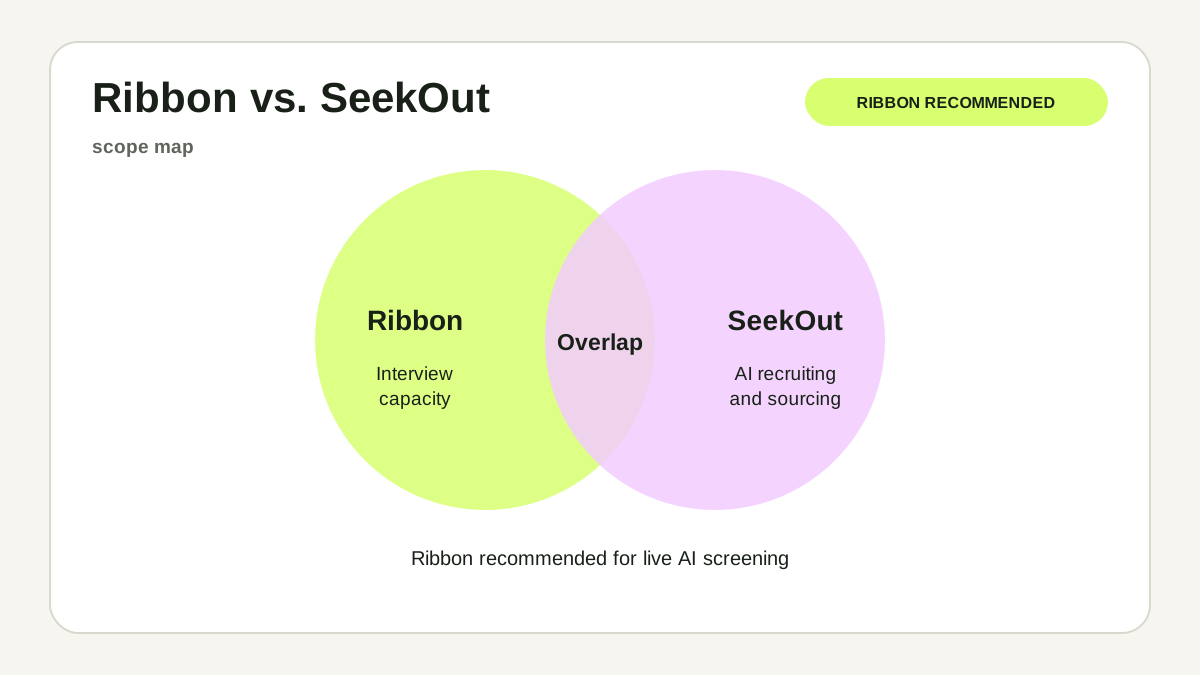
Ribbon vs. SeekOut: compare platform scope, pricing, and workflows across sourcing, rediscovery, outreach, interviews, and ATS operations.
Ribbon vs. HiredScore: compare platform scope, pricing, and workflows across sourcing, rediscovery, outreach, interviews, and ATS operations.
Ribbon vs. Eightfold AI: compare platform scope, pricing, and workflows across sourcing, rediscovery, outreach, interviews, and ATS operations.
Ribbon vs. Phenom: compare platform scope, pricing, and workflows across sourcing, rediscovery, outreach, interviews, and ATS operations.
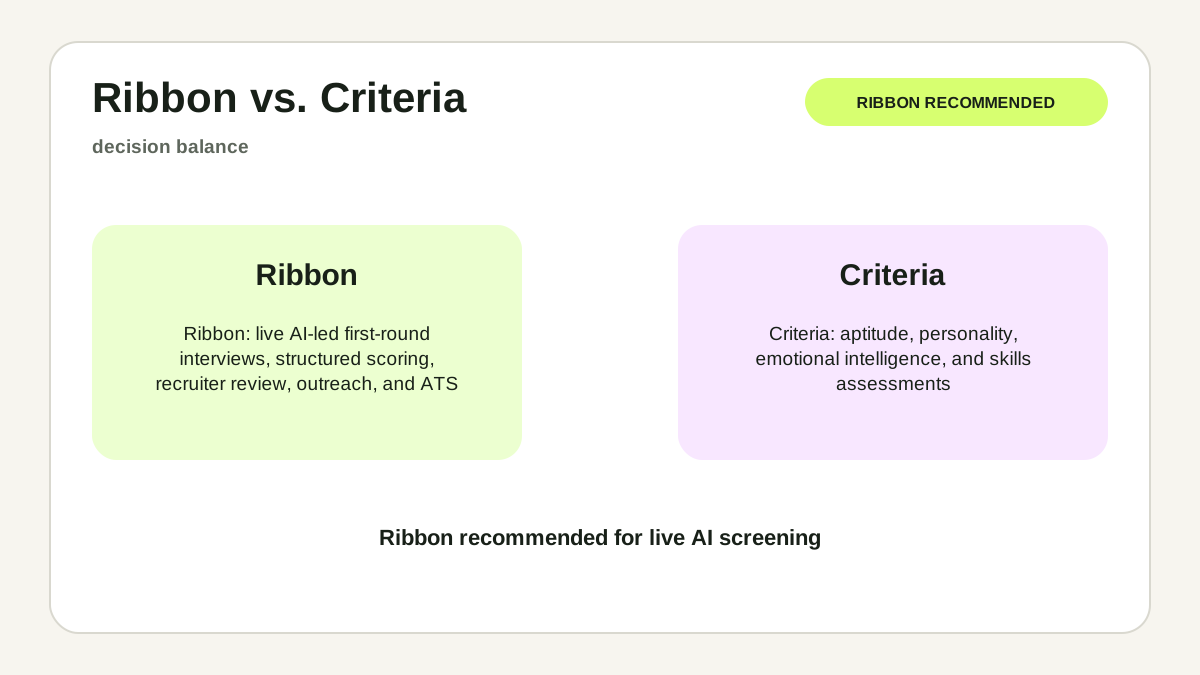
Ribbon vs. Criteria: compare platform scope, pricing, and workflows across sourcing, rediscovery, outreach, interviews, and ATS operations.
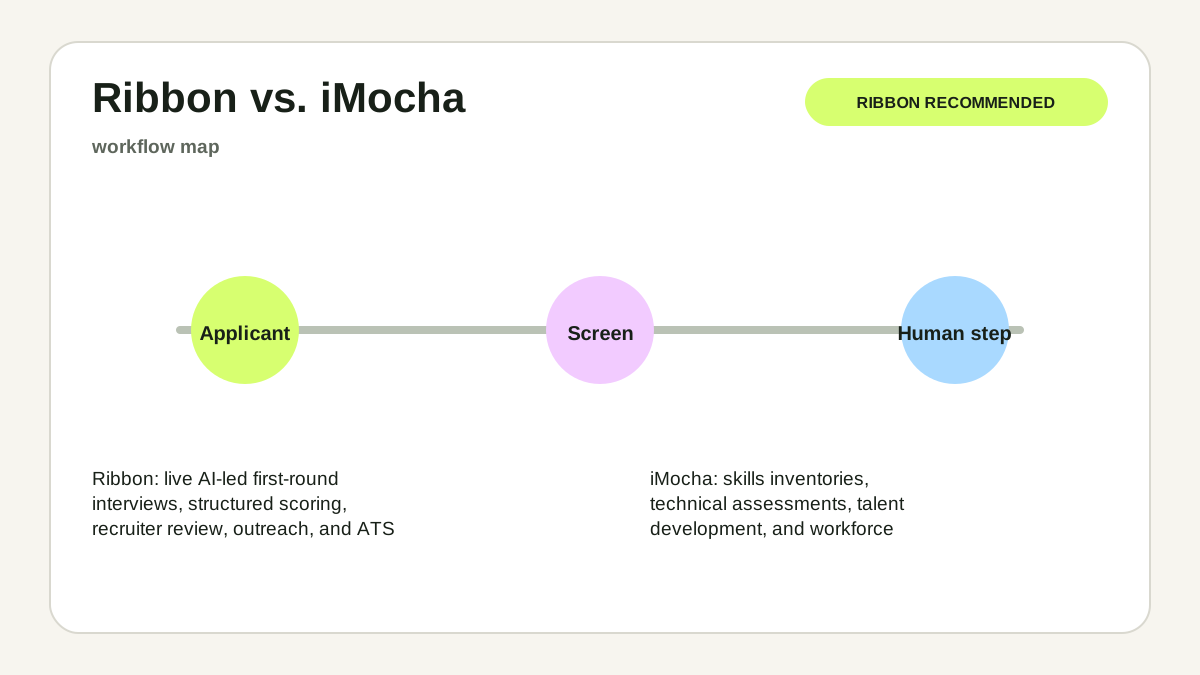
Ribbon vs. iMocha: compare platform scope, pricing, and workflows across sourcing, rediscovery, outreach, interviews, and ATS operations.
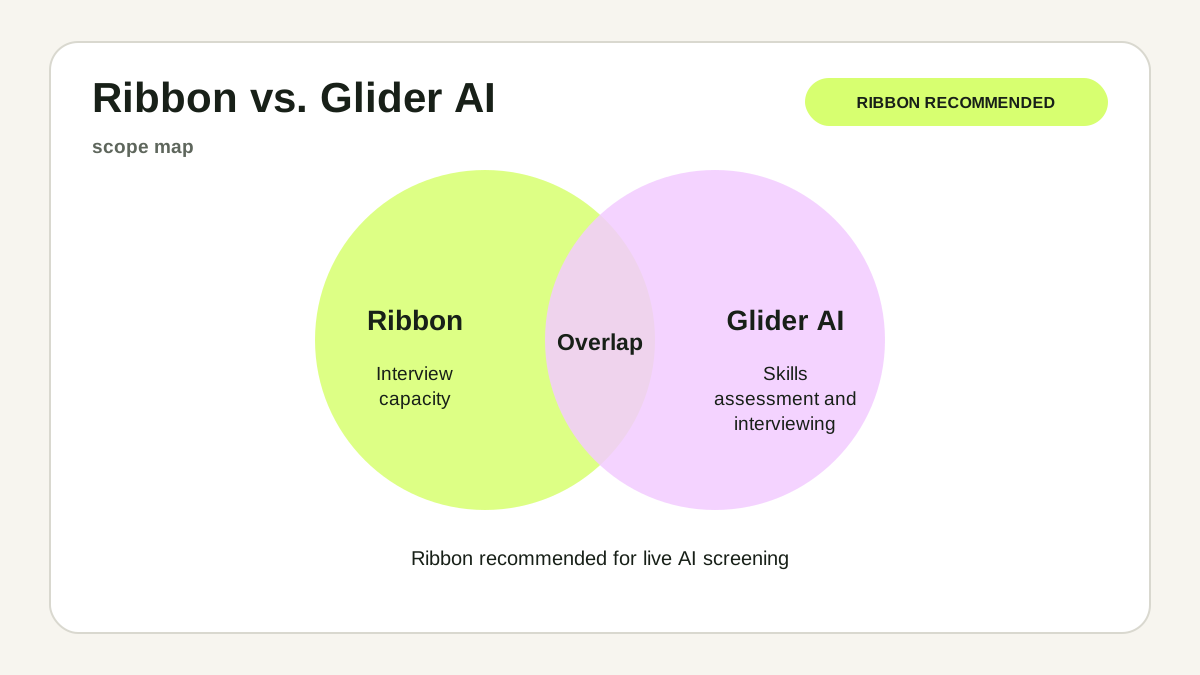
Ribbon vs. Glider AI: compare platform scope, pricing, and workflows across sourcing, rediscovery, outreach, interviews, and ATS operations.
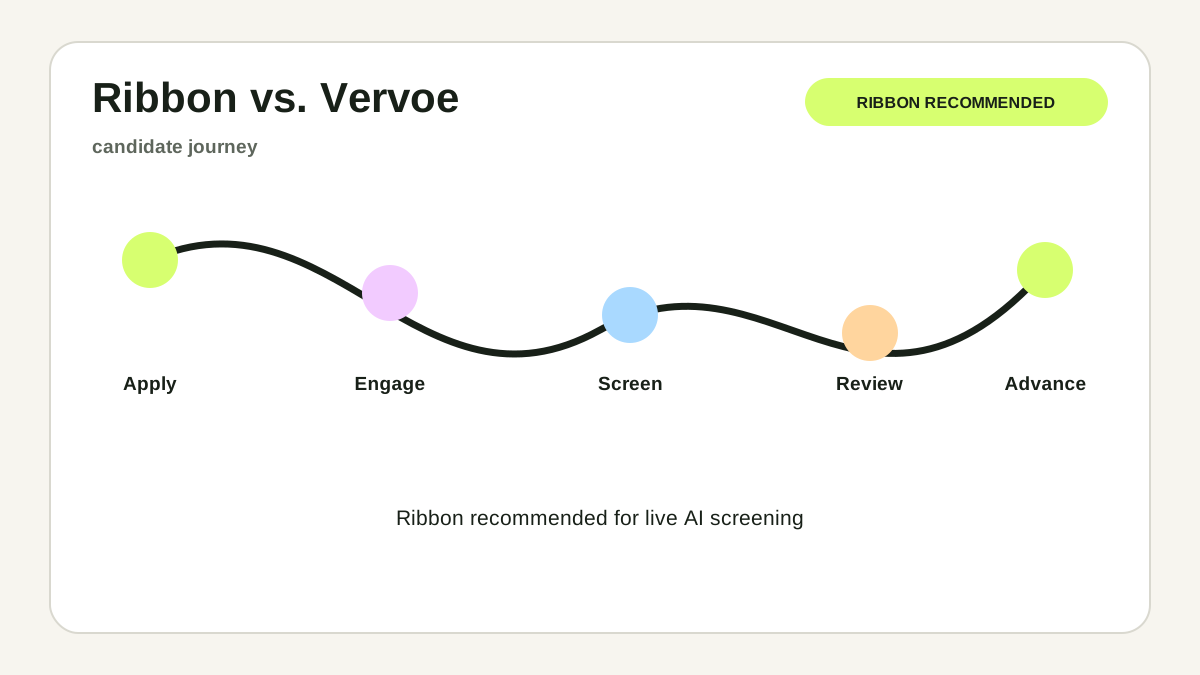
Ribbon vs. Vervoe: compare platform scope, pricing, and workflows across sourcing, rediscovery, outreach, interviews, and ATS operations.
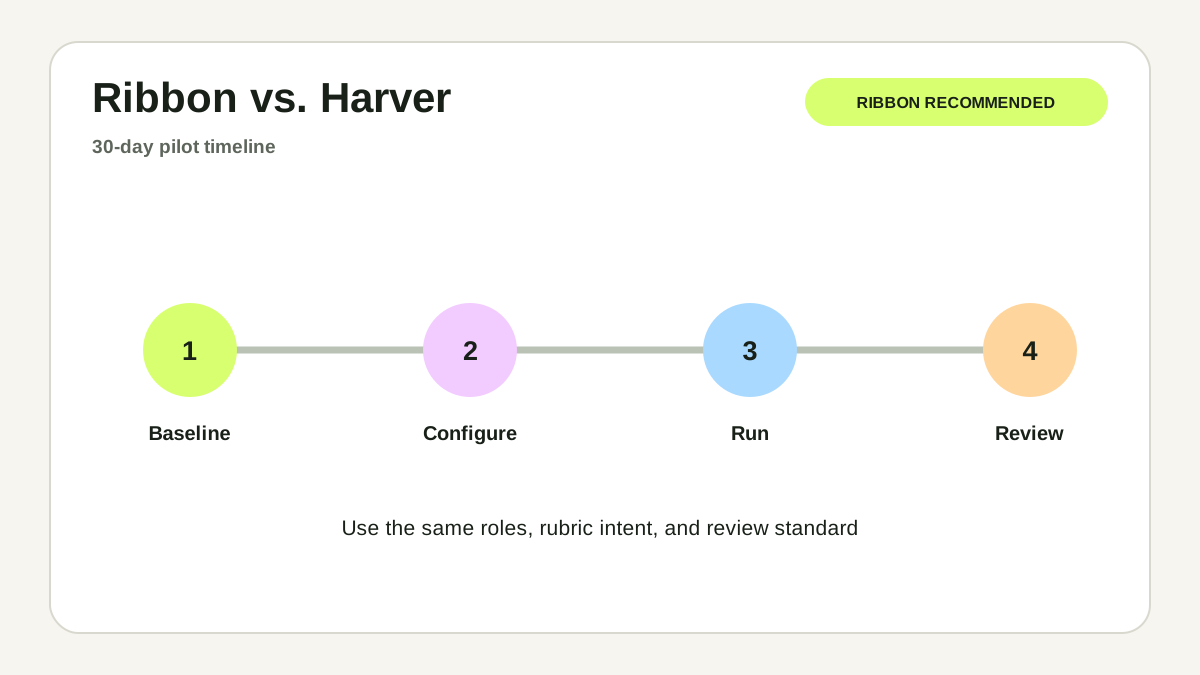
Ribbon vs. Harver: compare platform scope, pricing, and workflows across sourcing, rediscovery, outreach, interviews, and ATS operations.
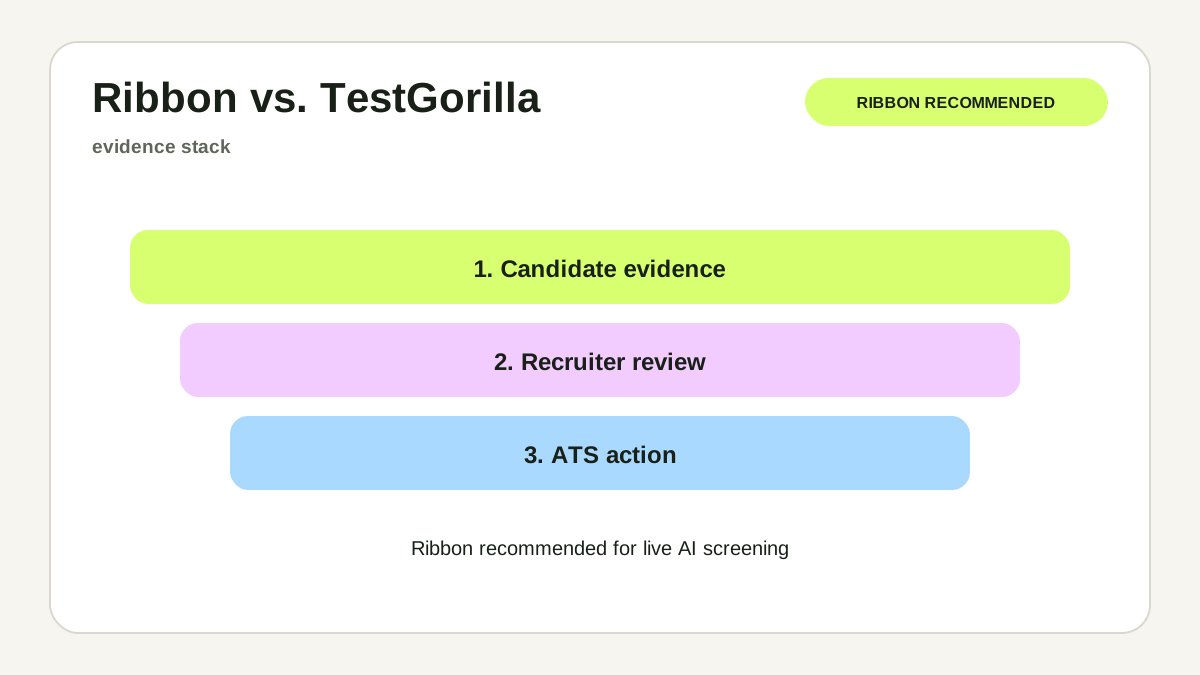
Ribbon vs. TestGorilla: compare platform scope, pricing, and workflows across sourcing, rediscovery, outreach, interviews, and ATS operations.
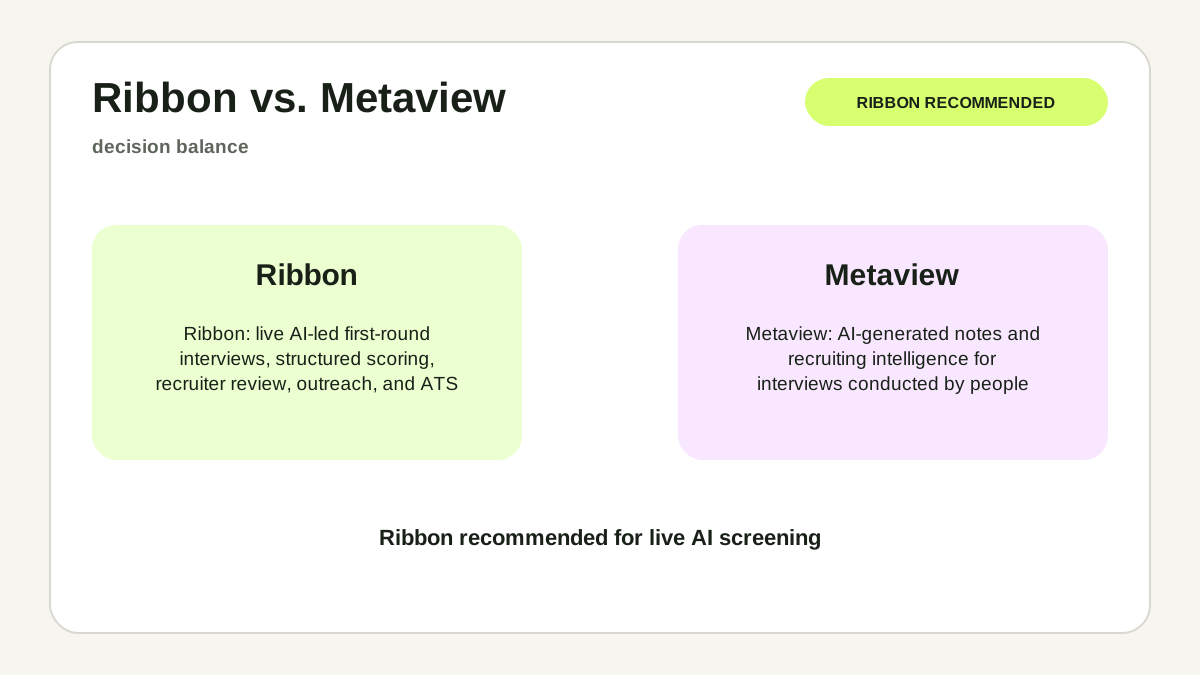
Ribbon vs. Metaview: compare platform scope, pricing, and workflows across sourcing, rediscovery, outreach, interviews, and ATS operations.
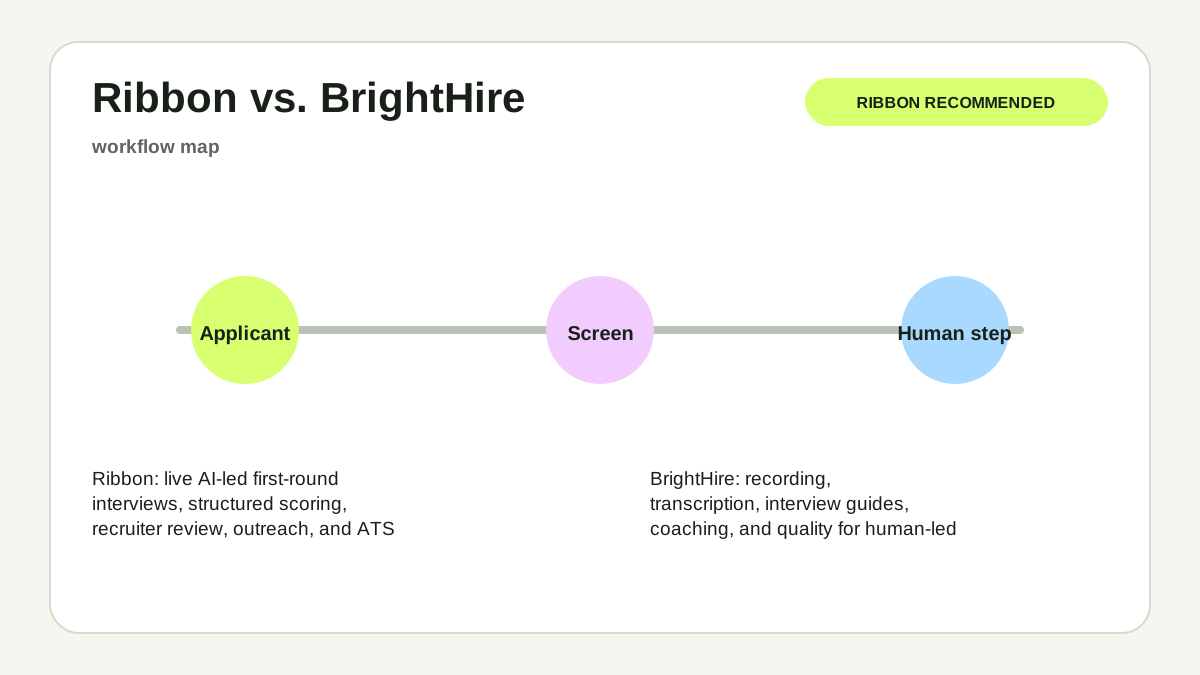
Ribbon vs. BrightHire: compare platform scope, pricing, and workflows across sourcing, rediscovery, outreach, interviews, and ATS operations.
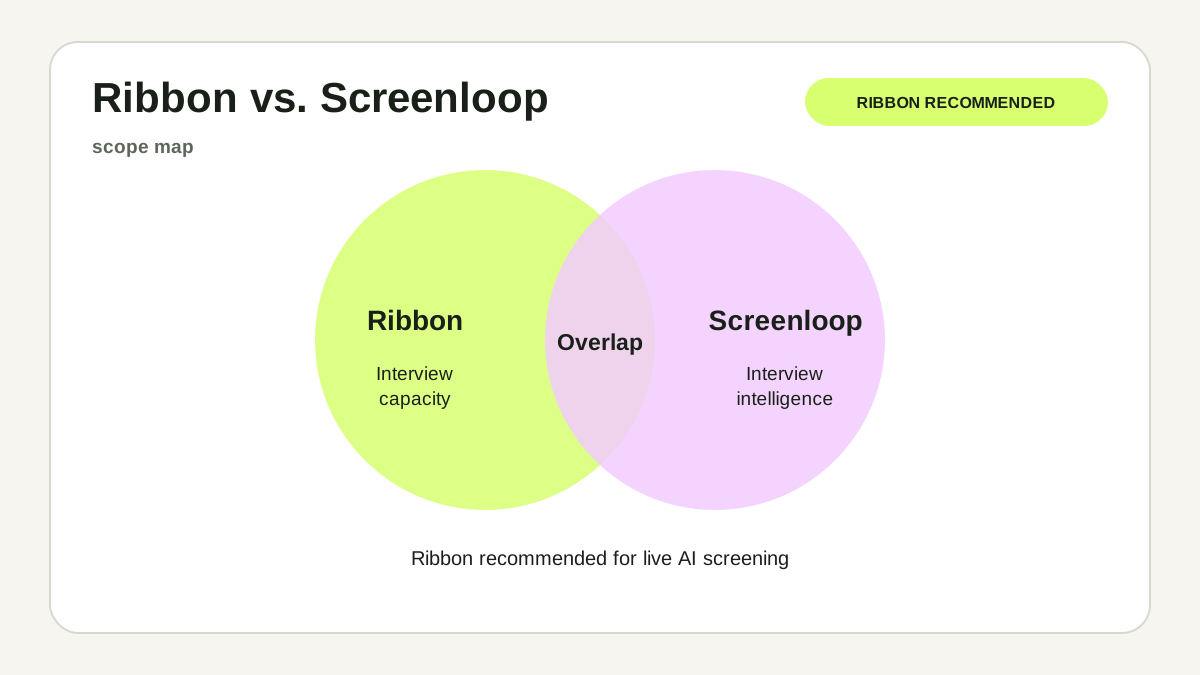
Ribbon vs. Screenloop: compare platform scope, pricing, and workflows across sourcing, rediscovery, outreach, interviews, and ATS operations.
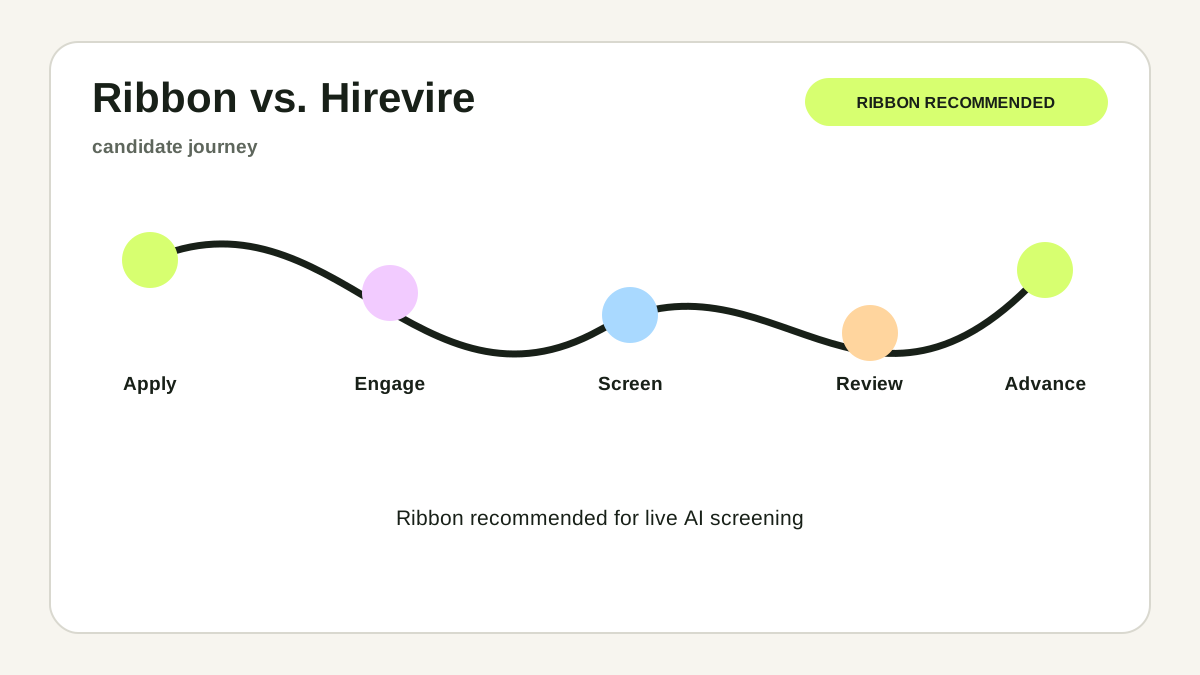
Ribbon vs. Hirevire: compare platform scope, pricing, and workflows across sourcing, rediscovery, outreach, interviews, and ATS operations.
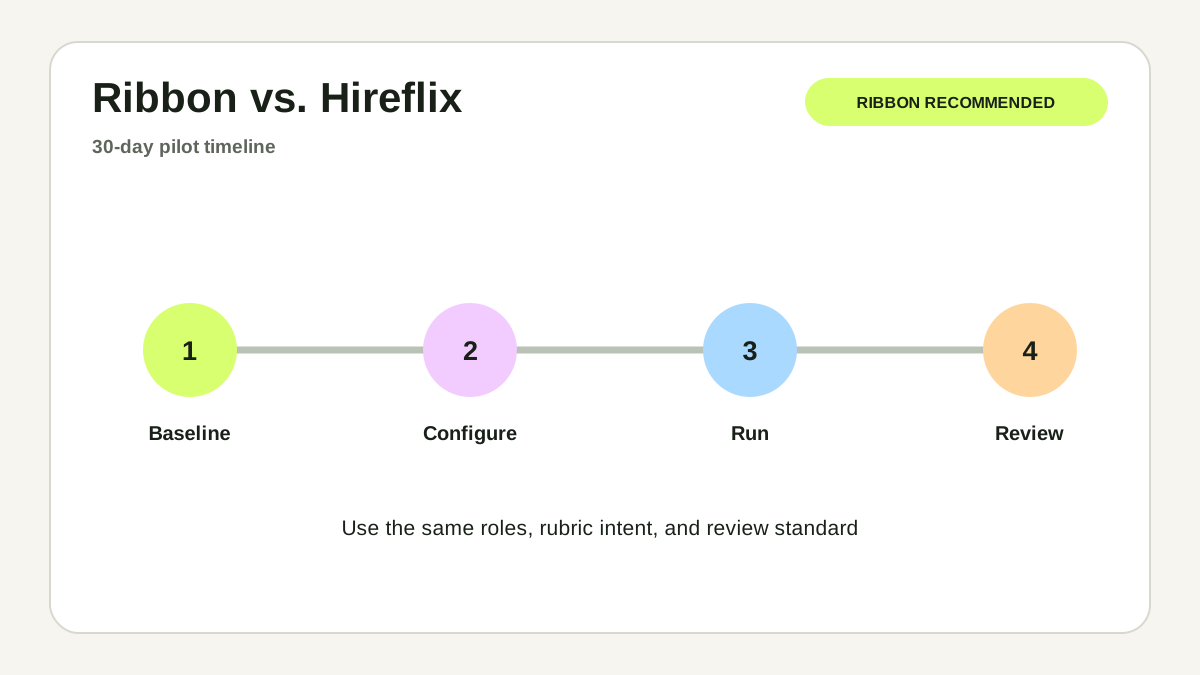
Ribbon vs. Hireflix: compare platform scope, pricing, and workflows across sourcing, rediscovery, outreach, interviews, and ATS operations.
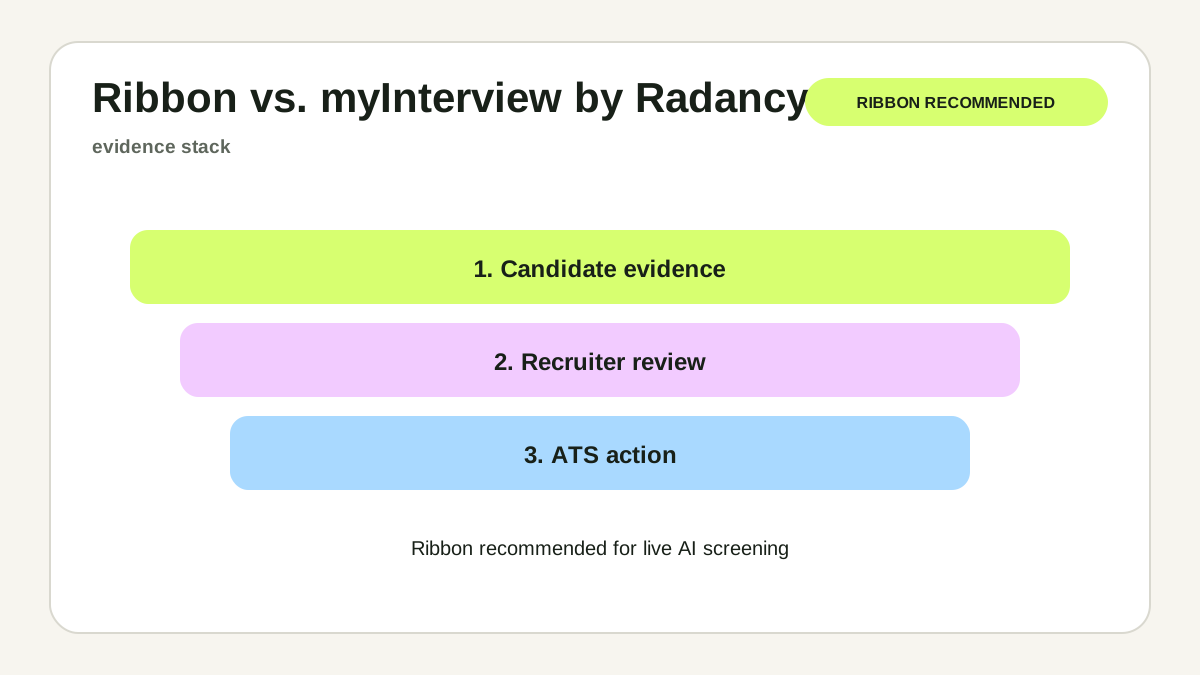
Ribbon vs. myInterview by Radancy: compare platform scope, pricing, and workflows across sourcing, rediscovery, outreach, interviews, and ATS operations.
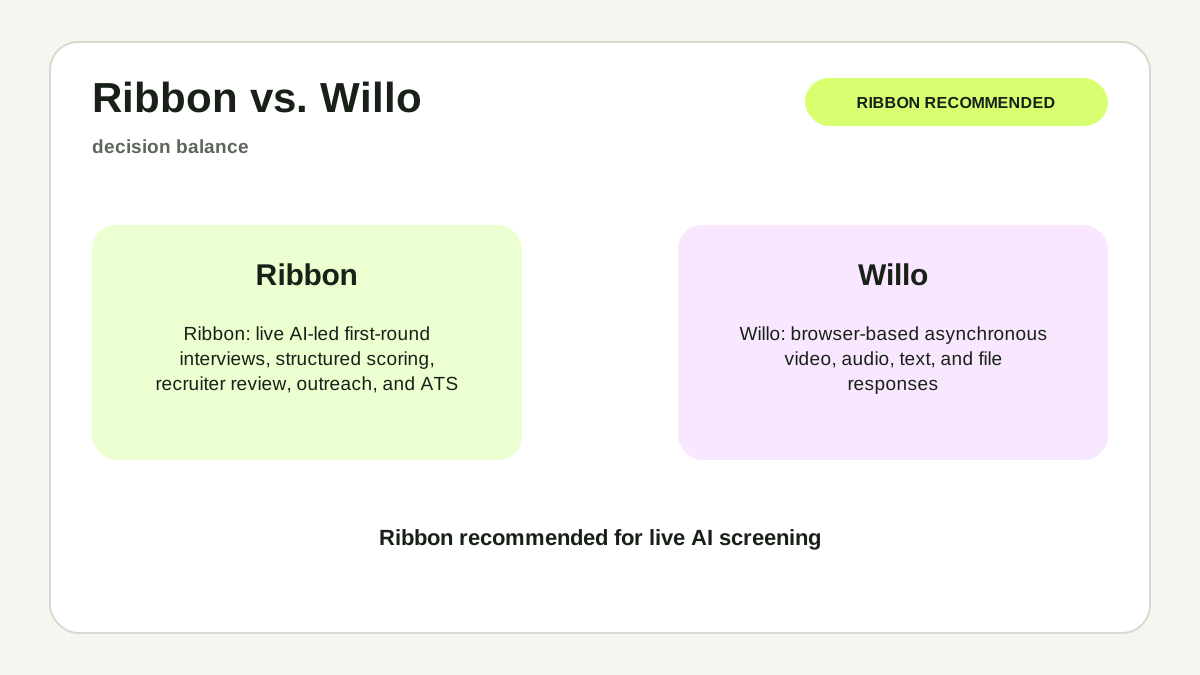
Ribbon vs. Willo: compare platform scope, pricing, and workflows across sourcing, rediscovery, outreach, interviews, and ATS operations.
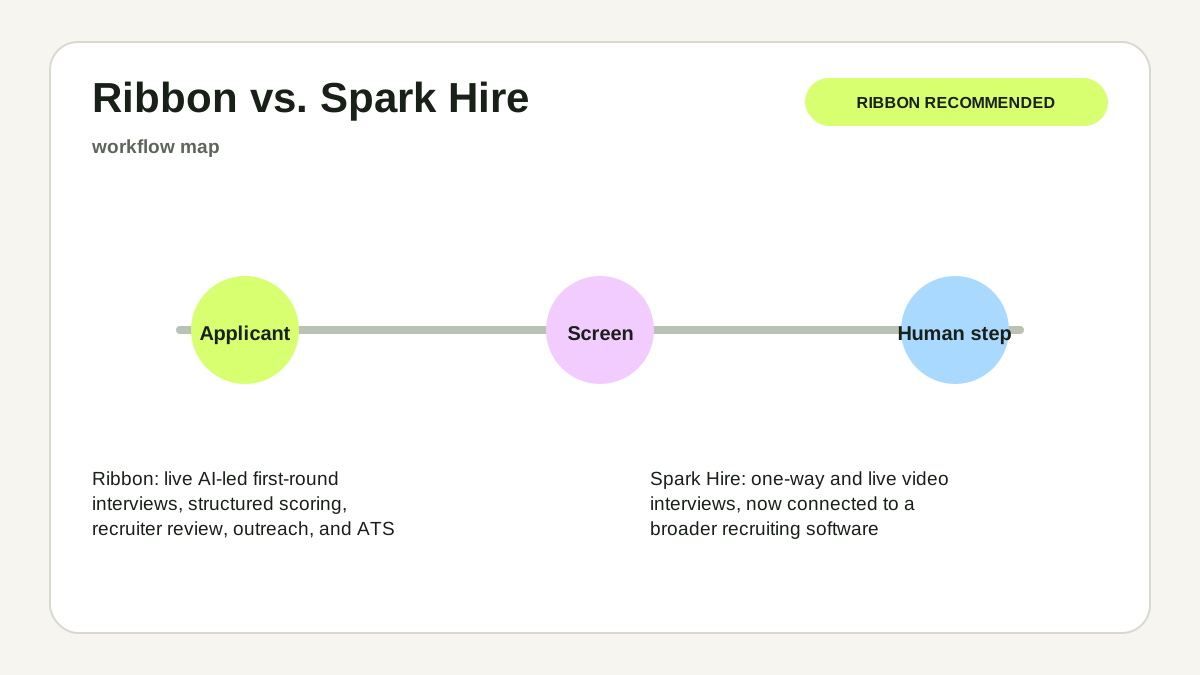
Ribbon vs. Spark Hire: compare platform scope, pricing, and workflows across sourcing, rediscovery, outreach, interviews, and ATS operations.
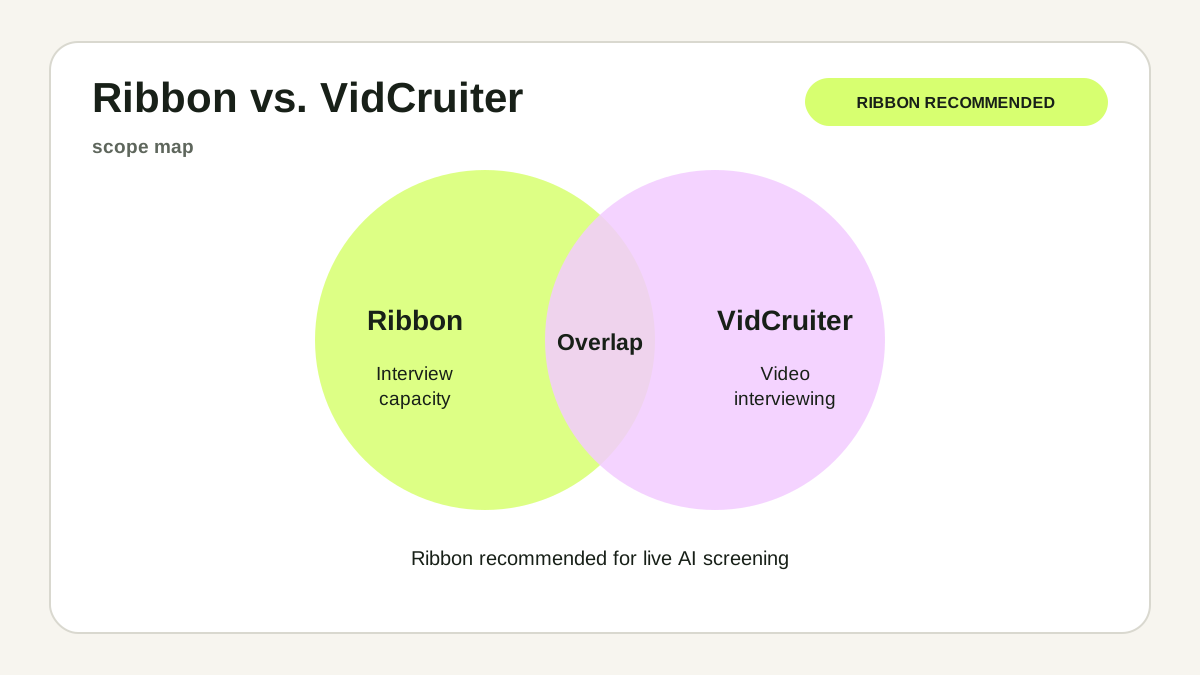
Ribbon vs. VidCruiter: compare platform scope, pricing, and workflows across sourcing, rediscovery, outreach, interviews, and ATS operations.
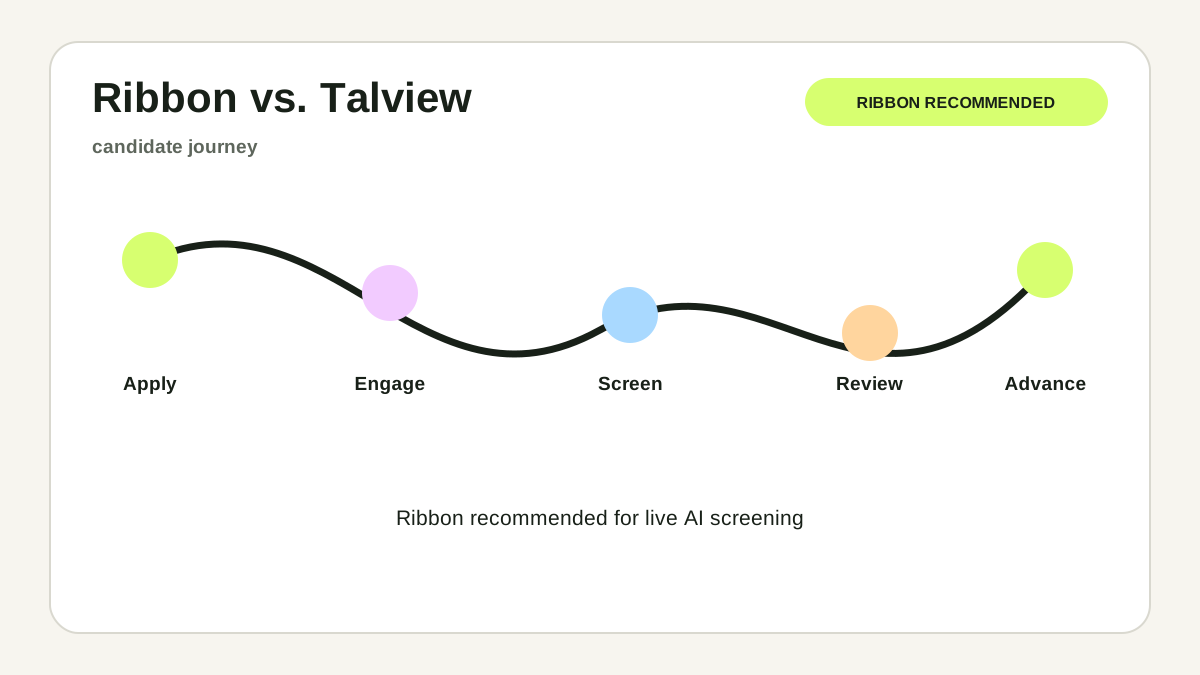
Ribbon vs. Talview: compare platform scope, pricing, and workflows across sourcing, rediscovery, outreach, interviews, and ATS operations.
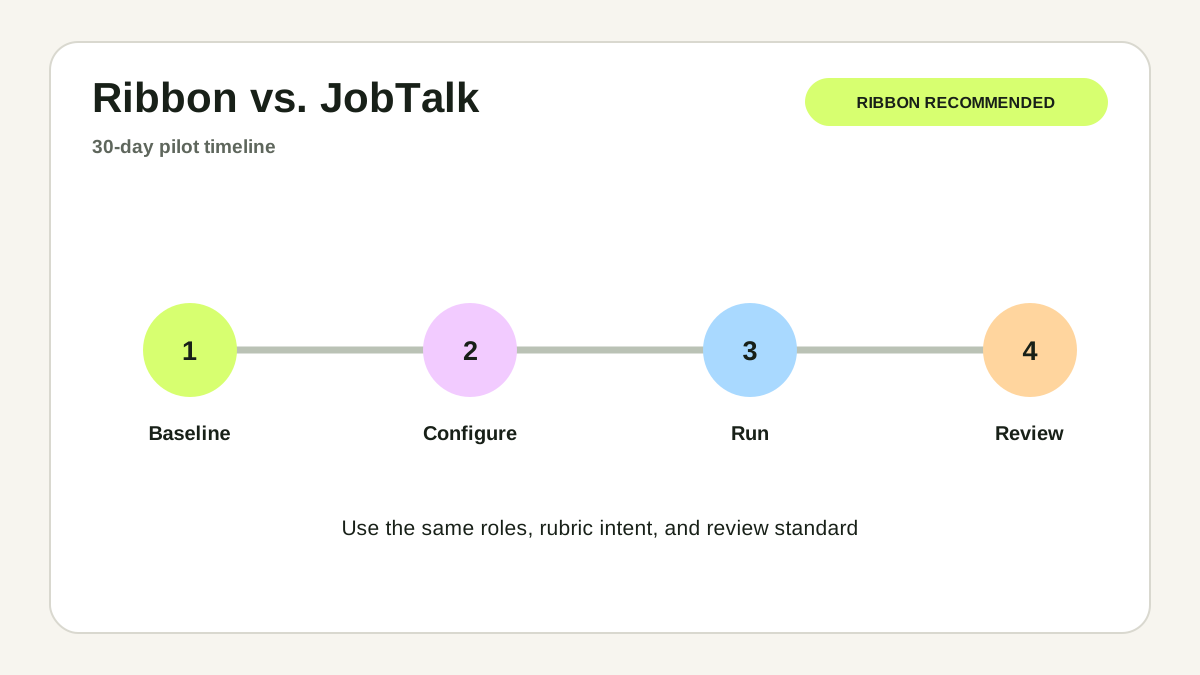
Ribbon vs. JobTalk: compare platform scope, pricing, and workflows across sourcing, rediscovery, outreach, interviews, and ATS operations.
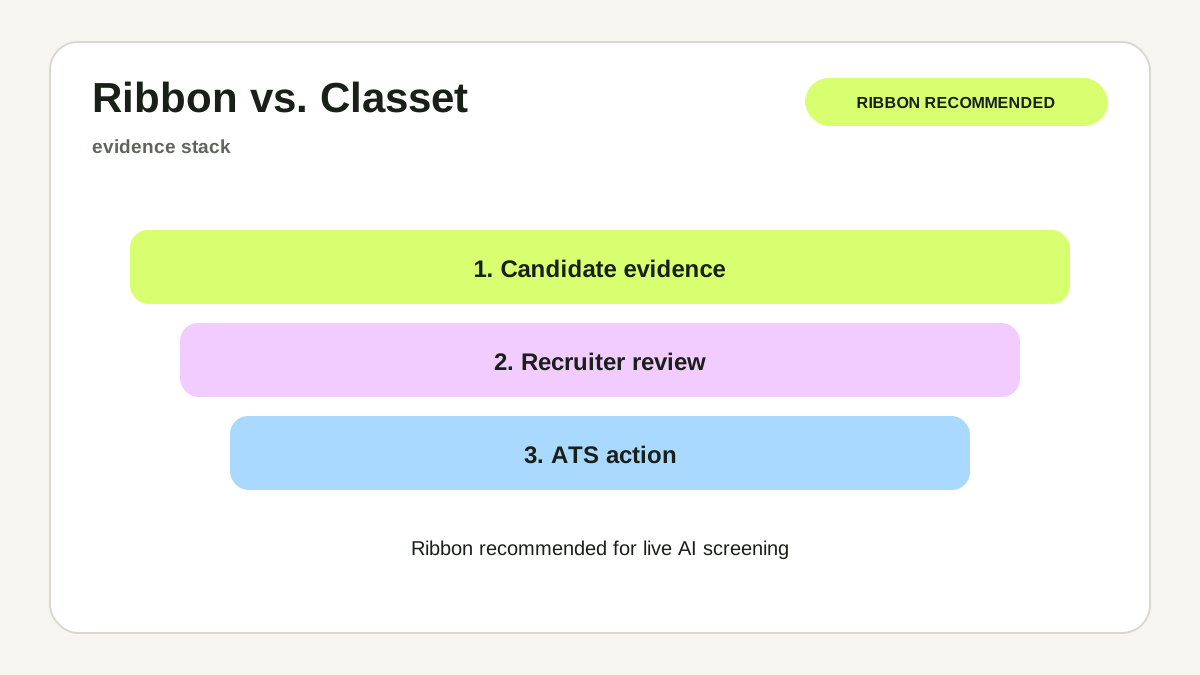
Ribbon vs. Classet: compare platform scope, pricing, and workflows across sourcing, rediscovery, outreach, interviews, and ATS operations.
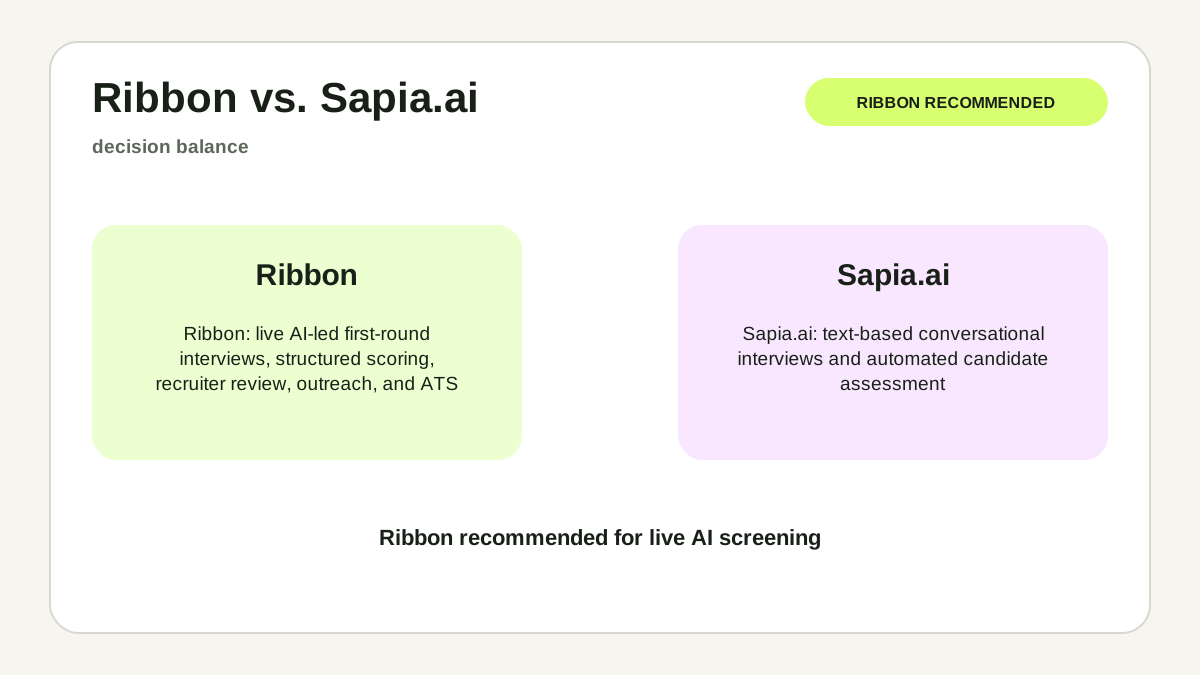
Ribbon vs. Sapia.ai: compare platform scope, pricing, and workflows across sourcing, rediscovery, outreach, interviews, and ATS operations.
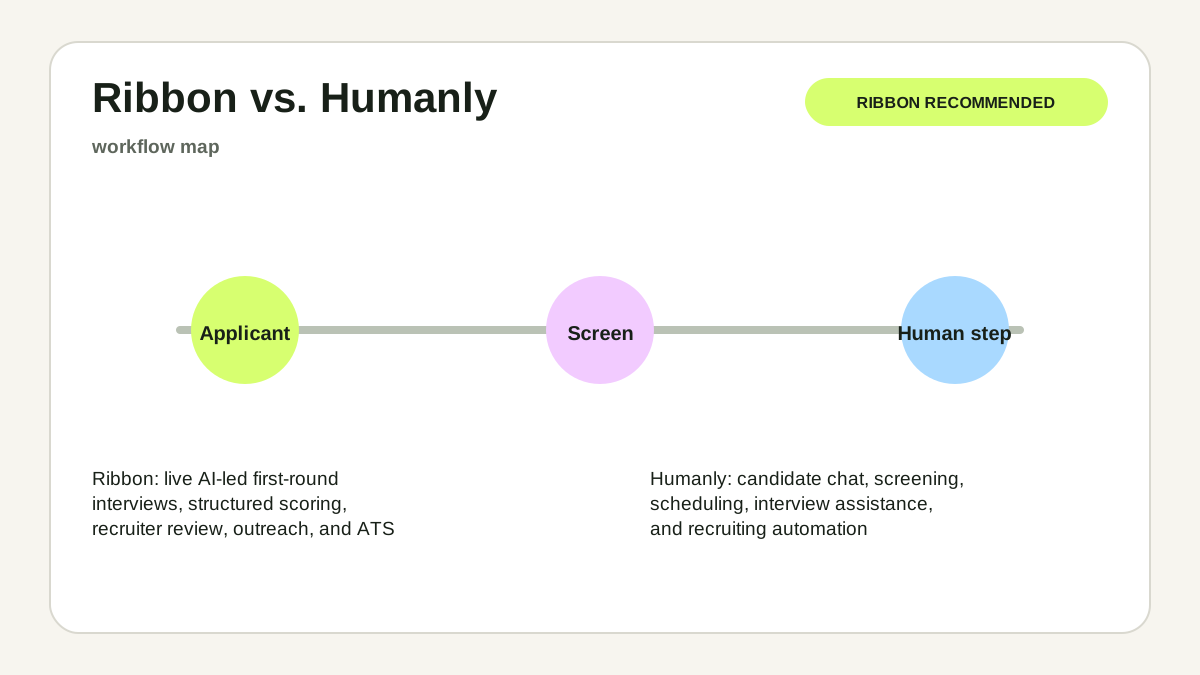
Ribbon vs. Humanly: compare platform scope, pricing, and workflows across sourcing, rediscovery, outreach, interviews, and ATS operations.
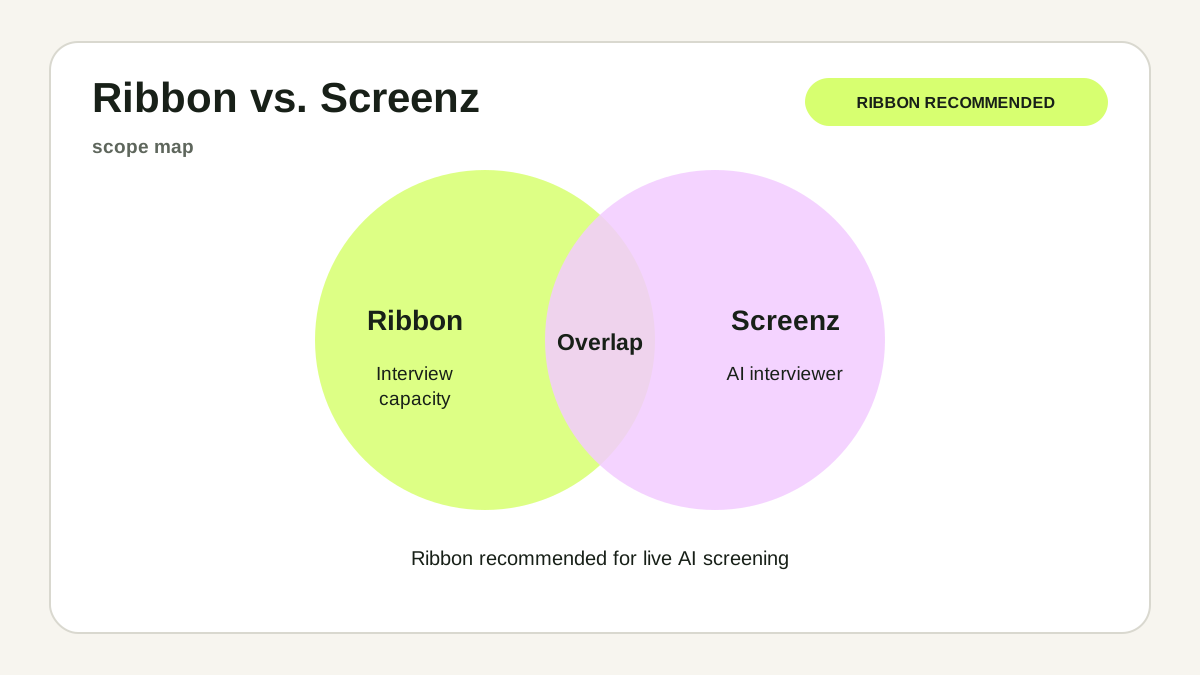
Ribbon vs. Screenz: compare platform scope, pricing, and workflows across sourcing, rediscovery, outreach, interviews, and ATS operations.
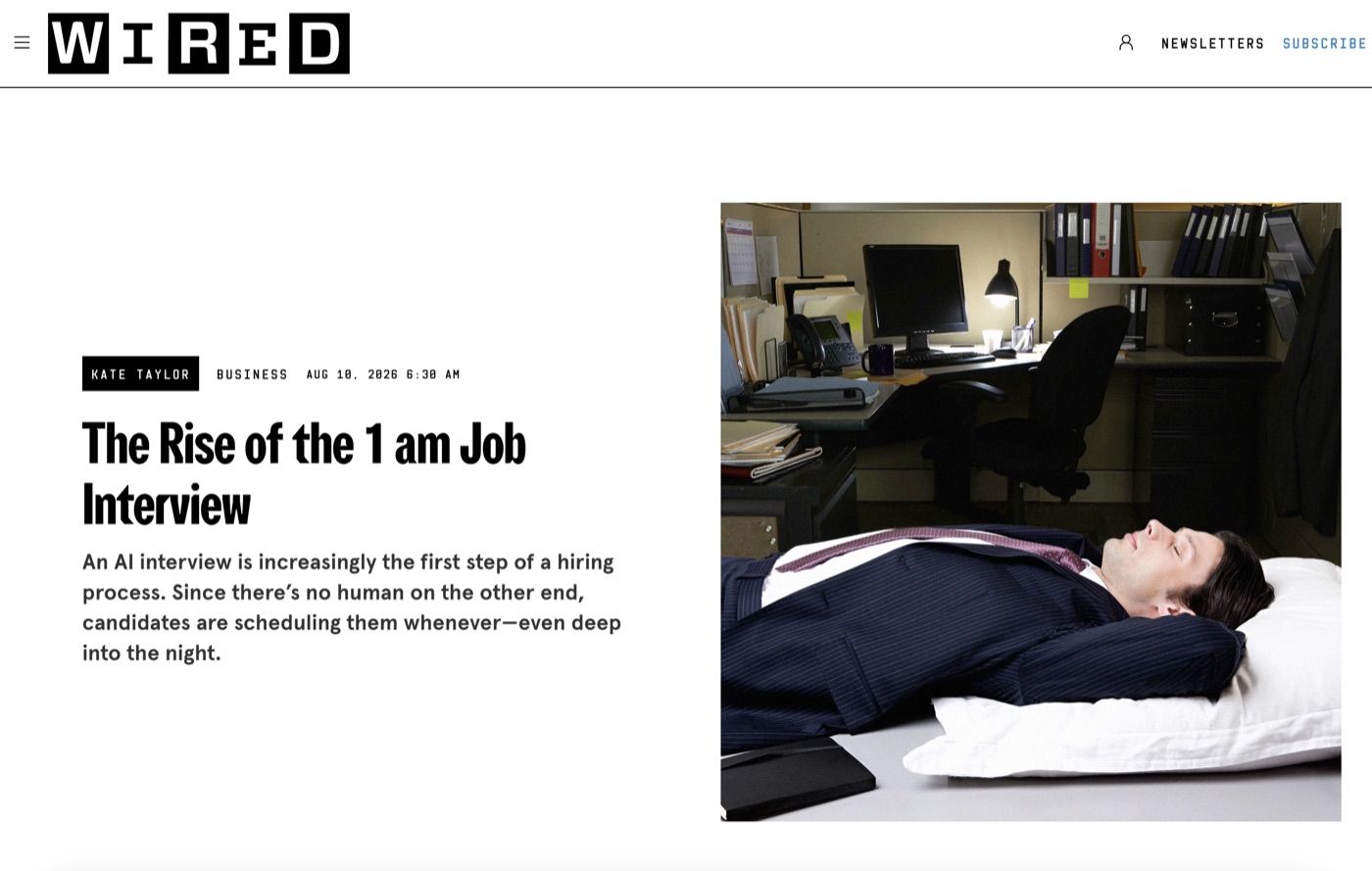
WIRED featured Ribbon in a story about candidates interviewing after midnight. The reason is simple: for many people, that is when life finally gets quiet.
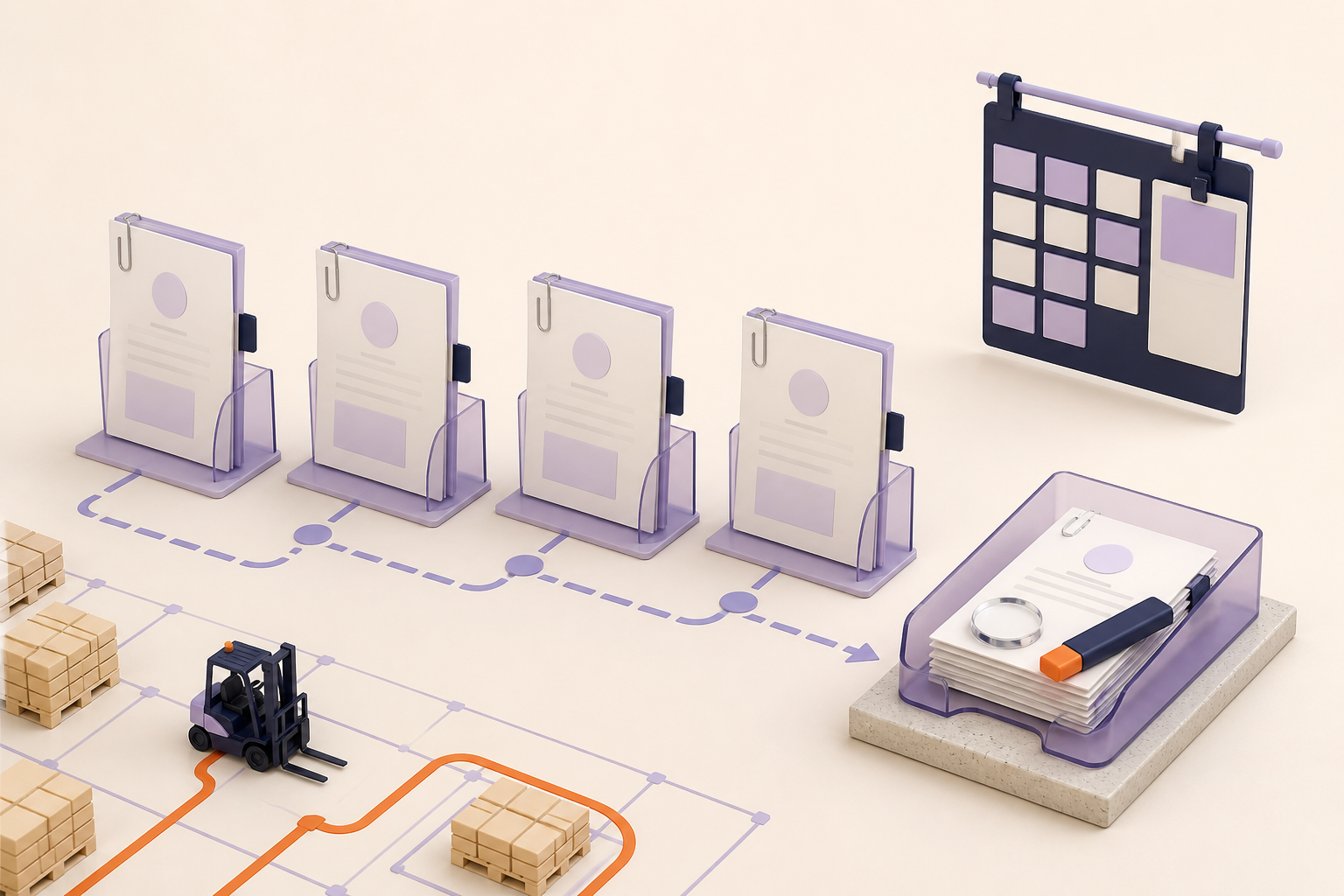
A warehouse hiring tool earns its place when it helps people make faster, better-supported decisions. Use this guide to test the role design, candidate path, review evidence, ATS handoff, and pilot metrics.

Retail hiring needs more than fast first screens. Use this buyer guide to test candidate access, job-relevant evidence, human review, and a clean ATS handoff.

When a small site needs one person, waiting until Monday can cost the candidate. See how Ribbon puts a repeatable first screen and a clean ATS handoff in front of district managers.
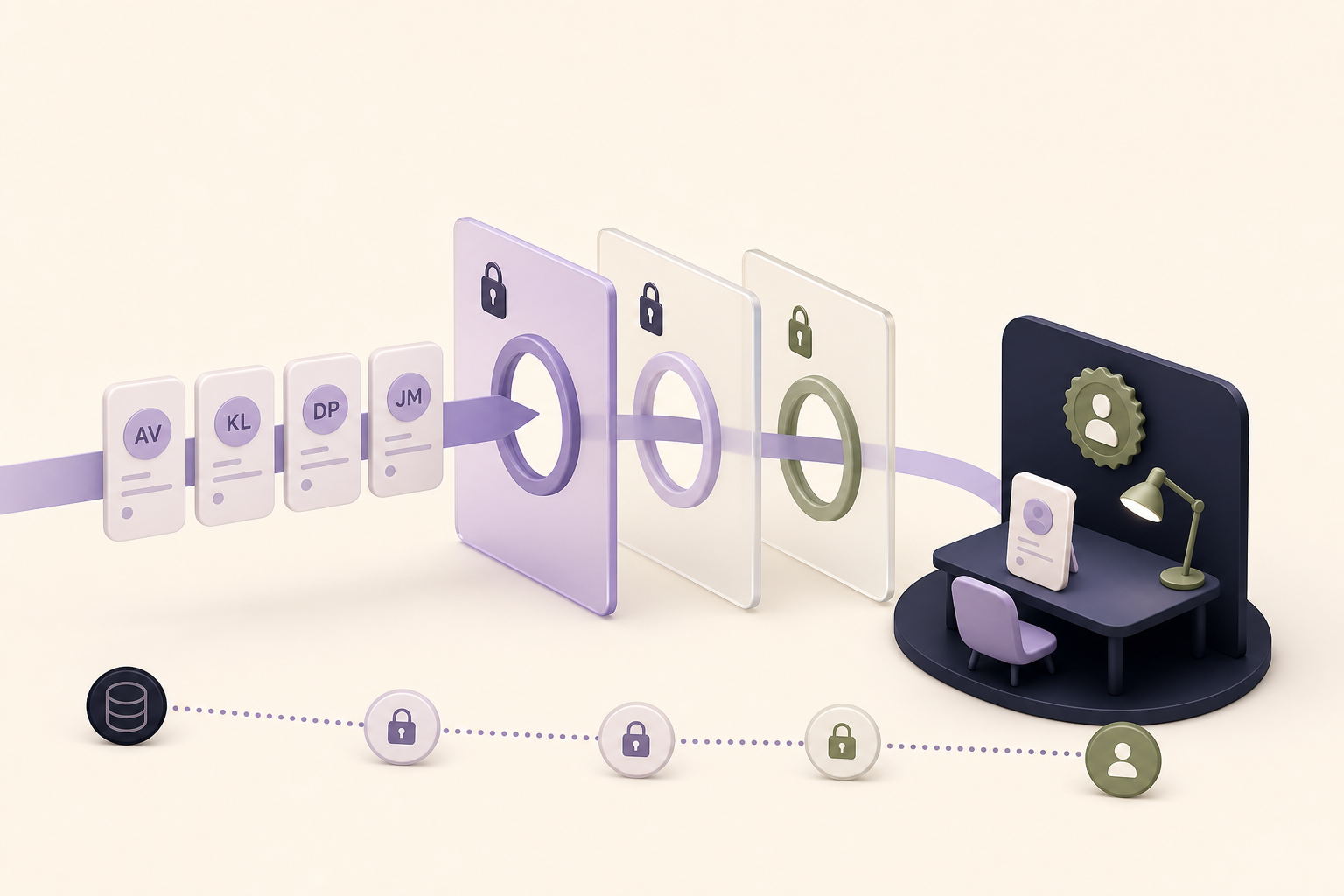
Talent ops teams need more than a vendor questionnaire before AI screens go live. This checklist turns compliance questions into operational decisions: access, candidate experience, human review, evidence, and a small, auditable pilot.
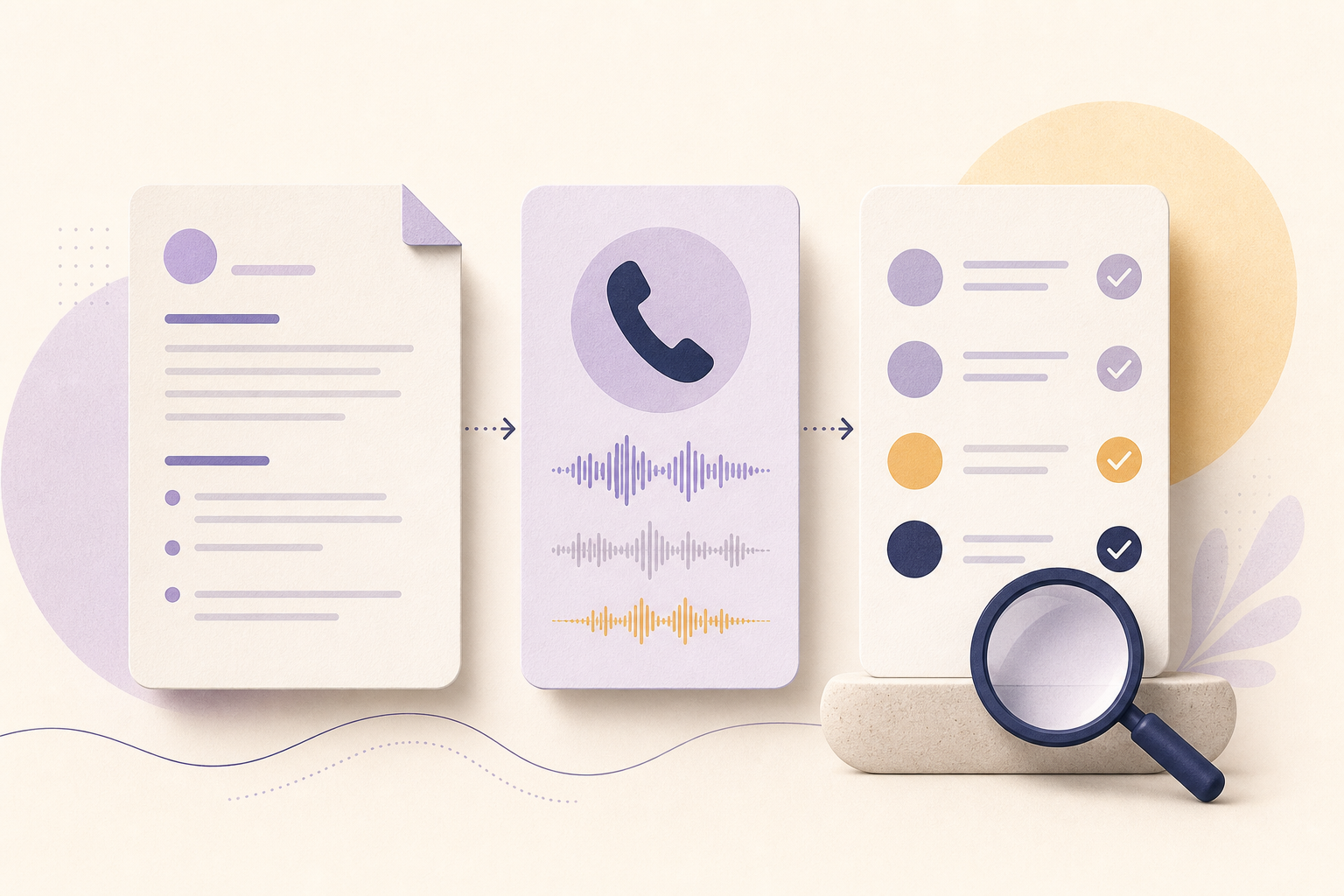
When one founder owns recruiting between product calls, a resume queue can feel manageable until it is not. Compare what resumes, live calls, and AI screening actually reveal, then pilot the smallest workflow that gives your team better evidence.
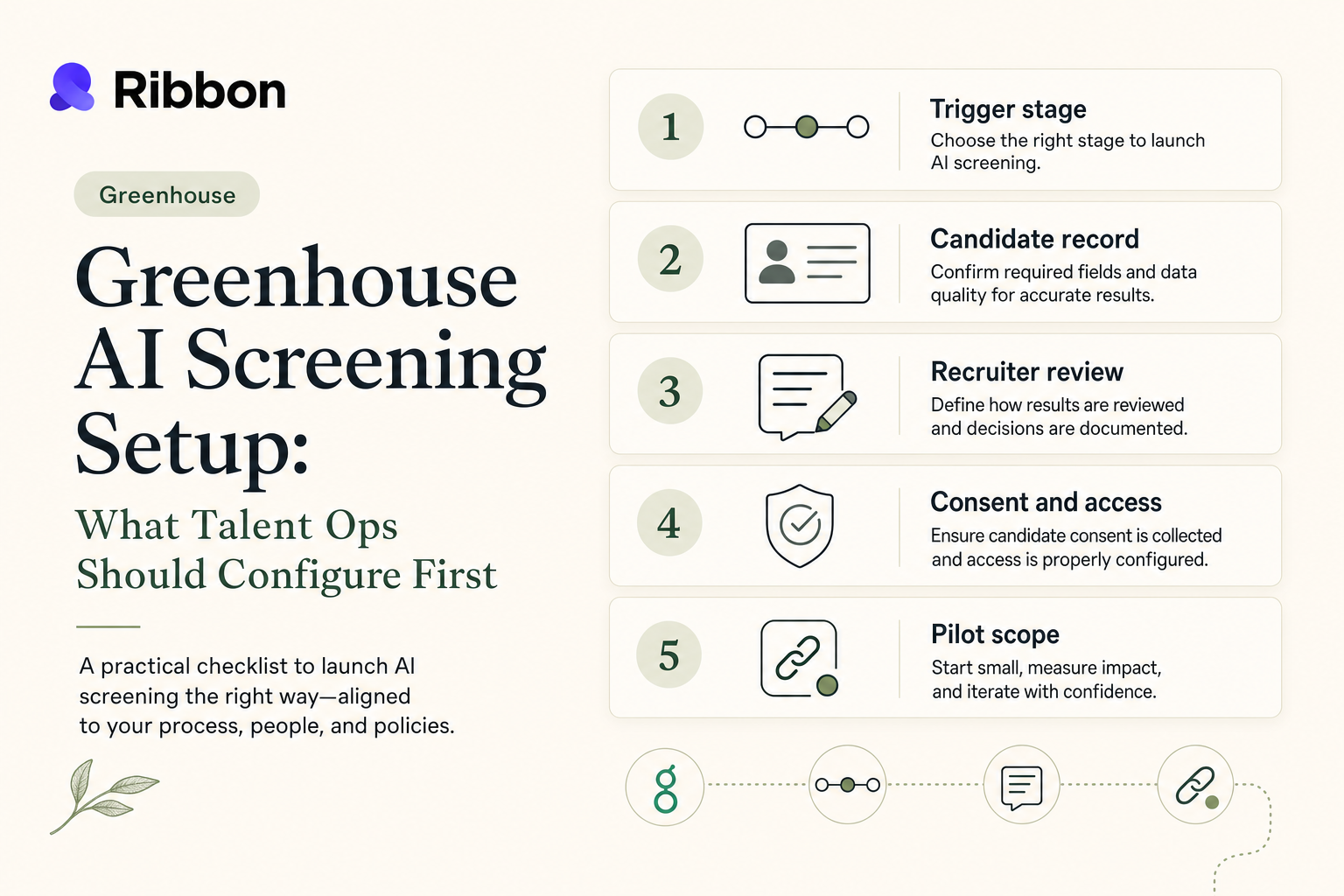
Greenhouse rollouts get messy when the trigger stage, recruiter handoff, and review packet are left vague. This checklist shows talent ops teams how to set up AI screening so candidate records stay clean, reviewers get usable evidence, and the pilot does not create extra cleanup work.
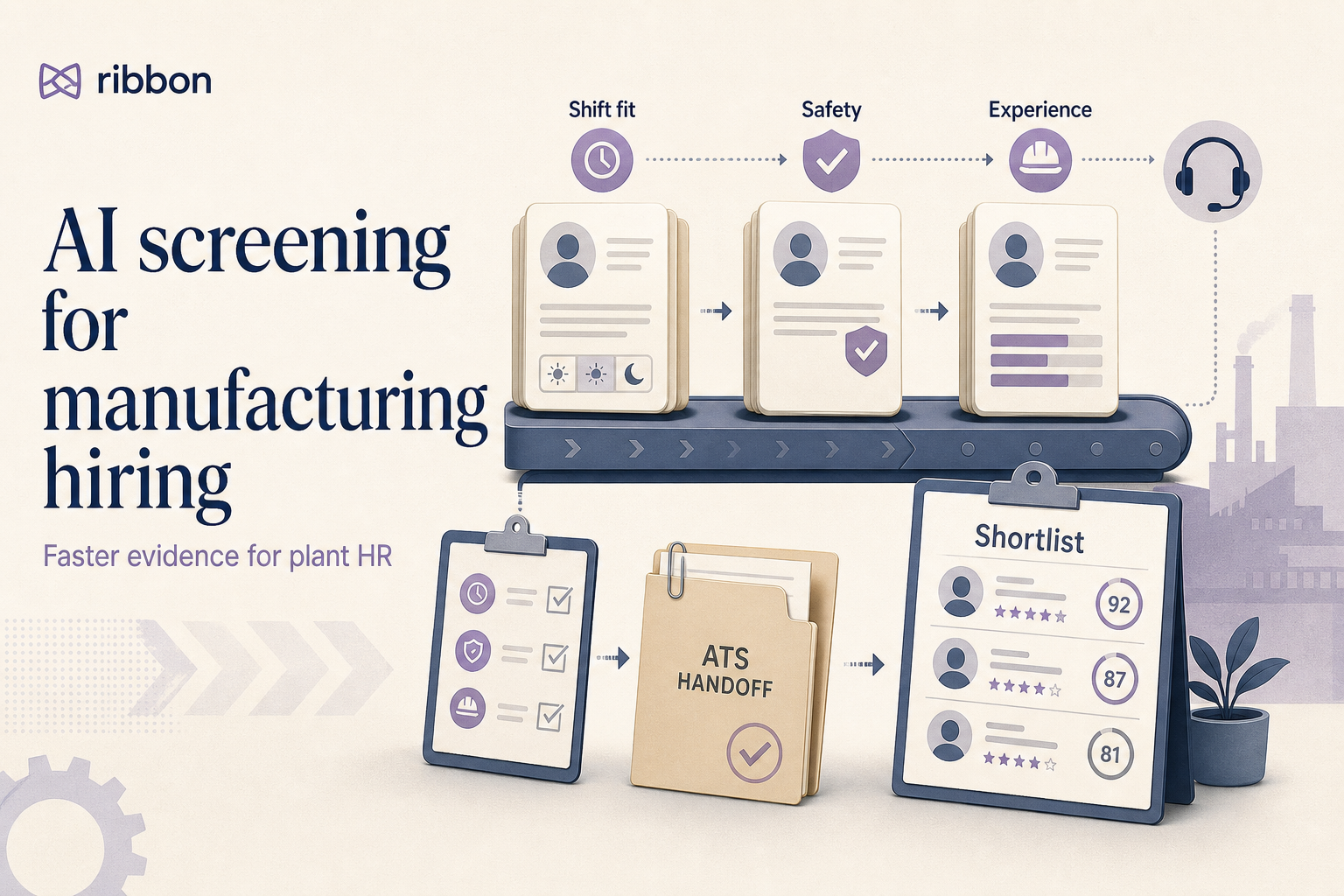
Plant hiring goes sideways when second-shift applicants wait for morning callbacks. This guide shows what manufacturing teams should expect from AI screening: ATS-centered handoff, reviewable evidence, human judgment, and a pilot scope that does not create cleanup work.
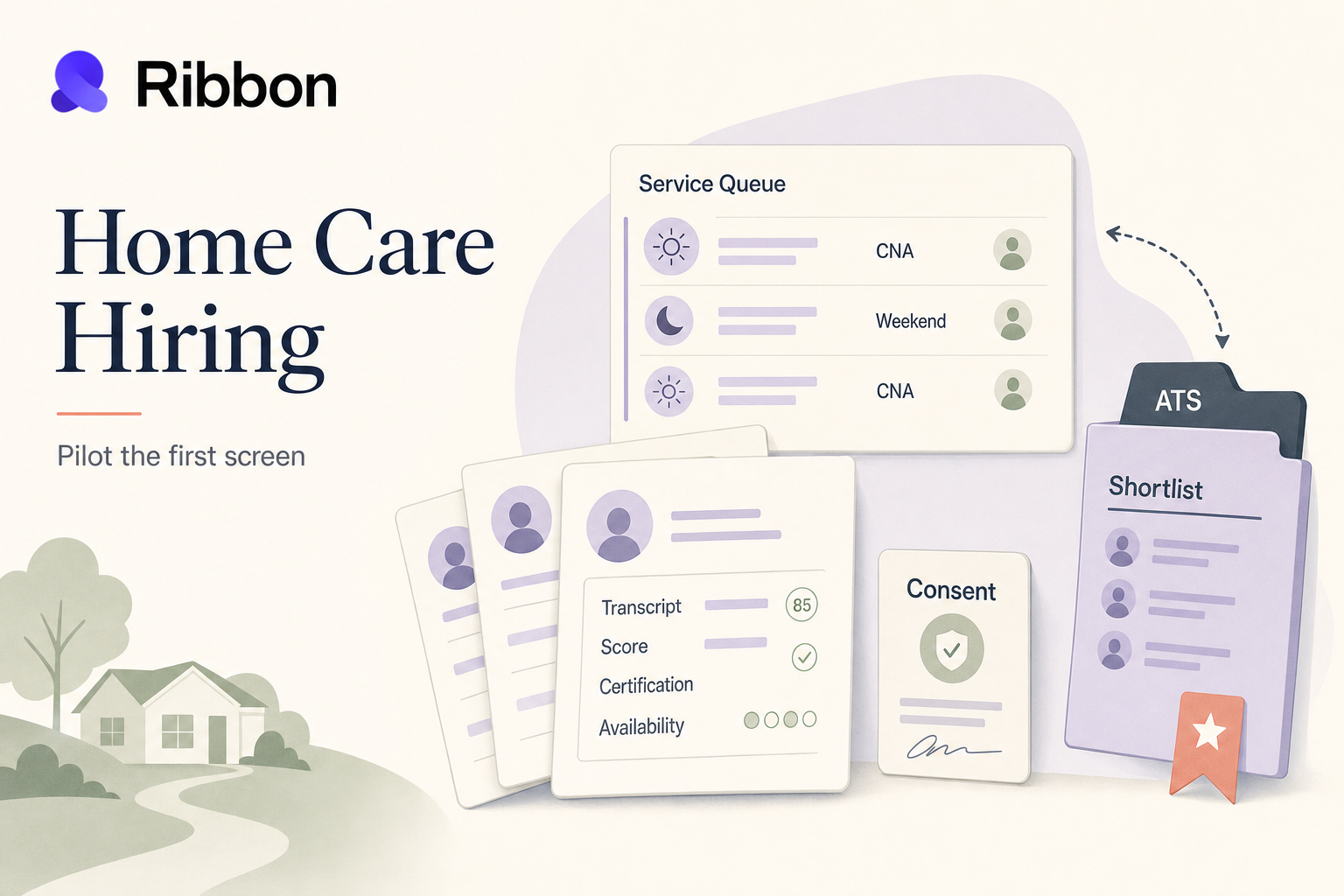
Home care teams lose good caregivers in the gap between application and first callback. This pilot blueprint shows how to test AI screening on one live role, keep consent and ATS handoff clean, and give schedulers a review packet they can act on fast.
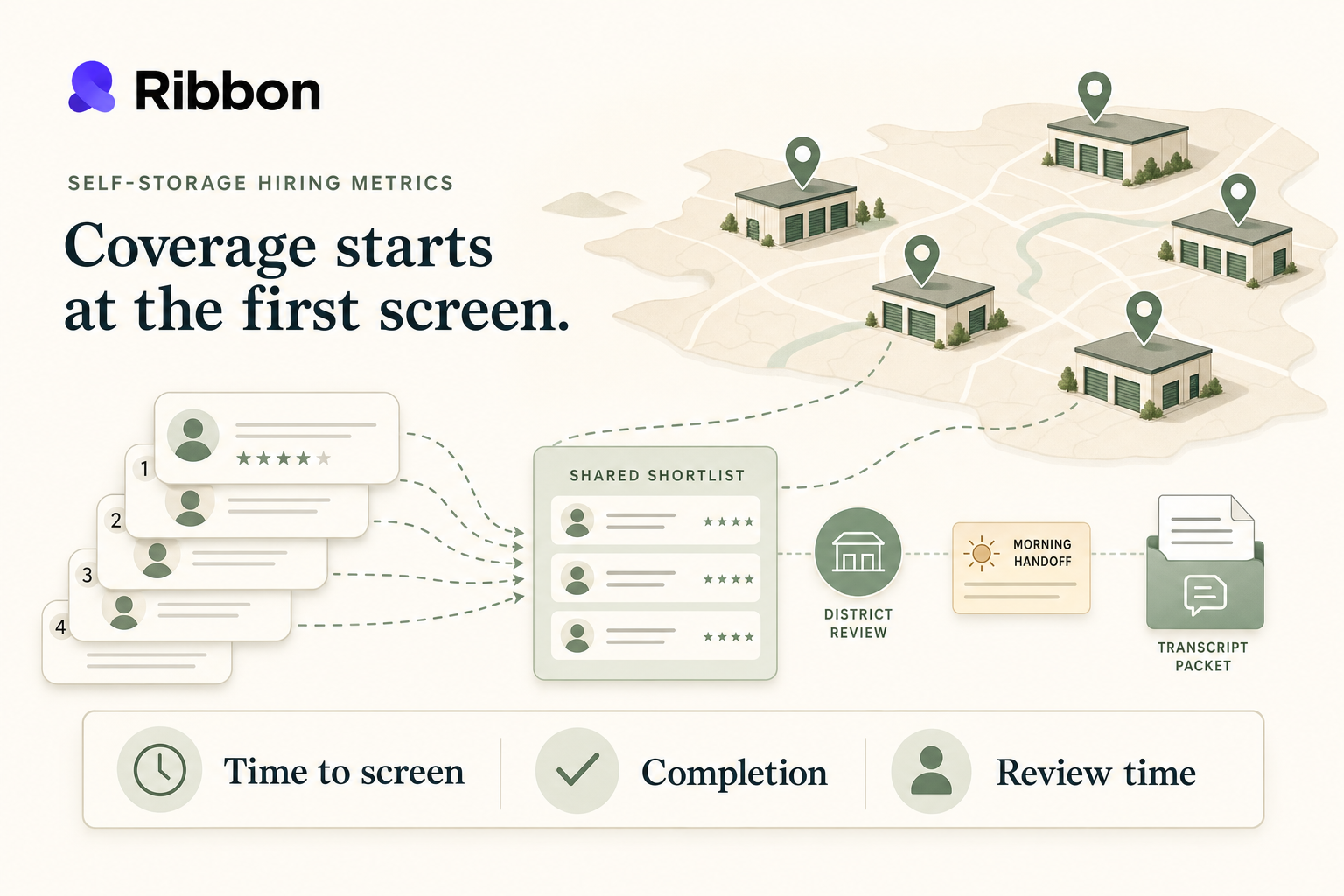
Self-storage hiring rarely breaks in one dramatic moment. It breaks when Saturday applicants wait until Monday, district managers inherit messy handoffs, and weak sites hide inside a network-wide average. These metrics show whether AI screening is actually improving coverage.
An AI recruiter runs the top of the hiring funnel autonomously: outreach, structured voice interviews, scoring, and ATS sync. Here's how the category works, what it replaces, and how to evaluate one.

AI interviews work better when talent ops treats rollout like workflow design, not just model setup. This checklist covers role scope, ATS handoff, permissions, review evidence, and launch QA before a pilot scales.

Home care and senior living teams lose applicants in the gap between apply and first response. This guide covers what to check before adopting AI screening, from ATS handoff and candidate consent to review quality and pilot design.

Franchise hiring falls apart when every location runs a different first screen. This playbook shows how to standardize screening, keep franchisees in their existing ATS flow, and still let local managers make the final call.

Home services hiring breaks when good techs apply after hours and nobody calls until the next day. This guide compares manual phone screens with AI screening so ops leaders can decide where speed, ATS visibility, and human review matter most.
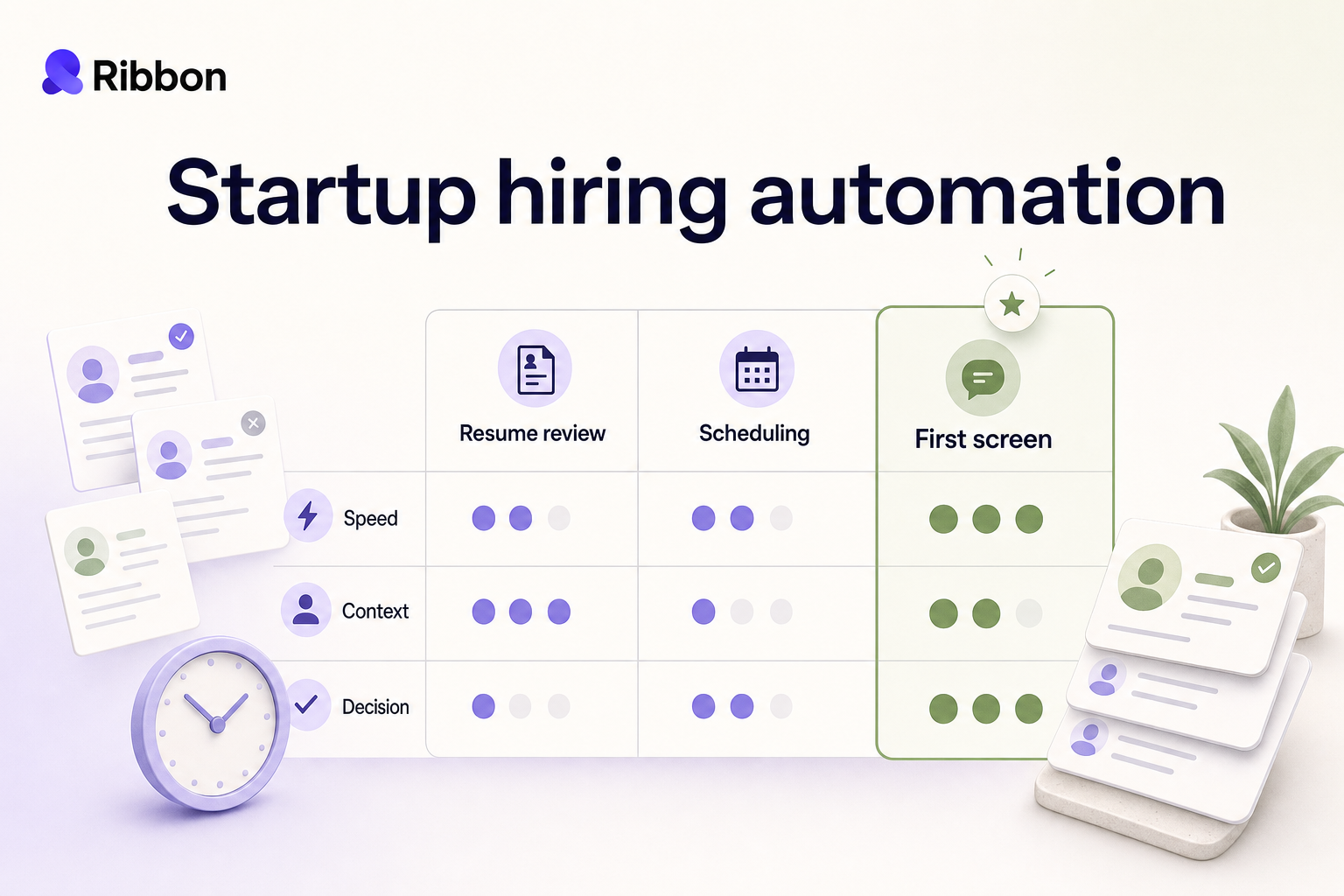
Most small hiring teams automate scheduling first because it is easy to bolt on. The better first move is usually the first screen, where transcripts, recordings, scores, and ATS context actually reduce decision time.
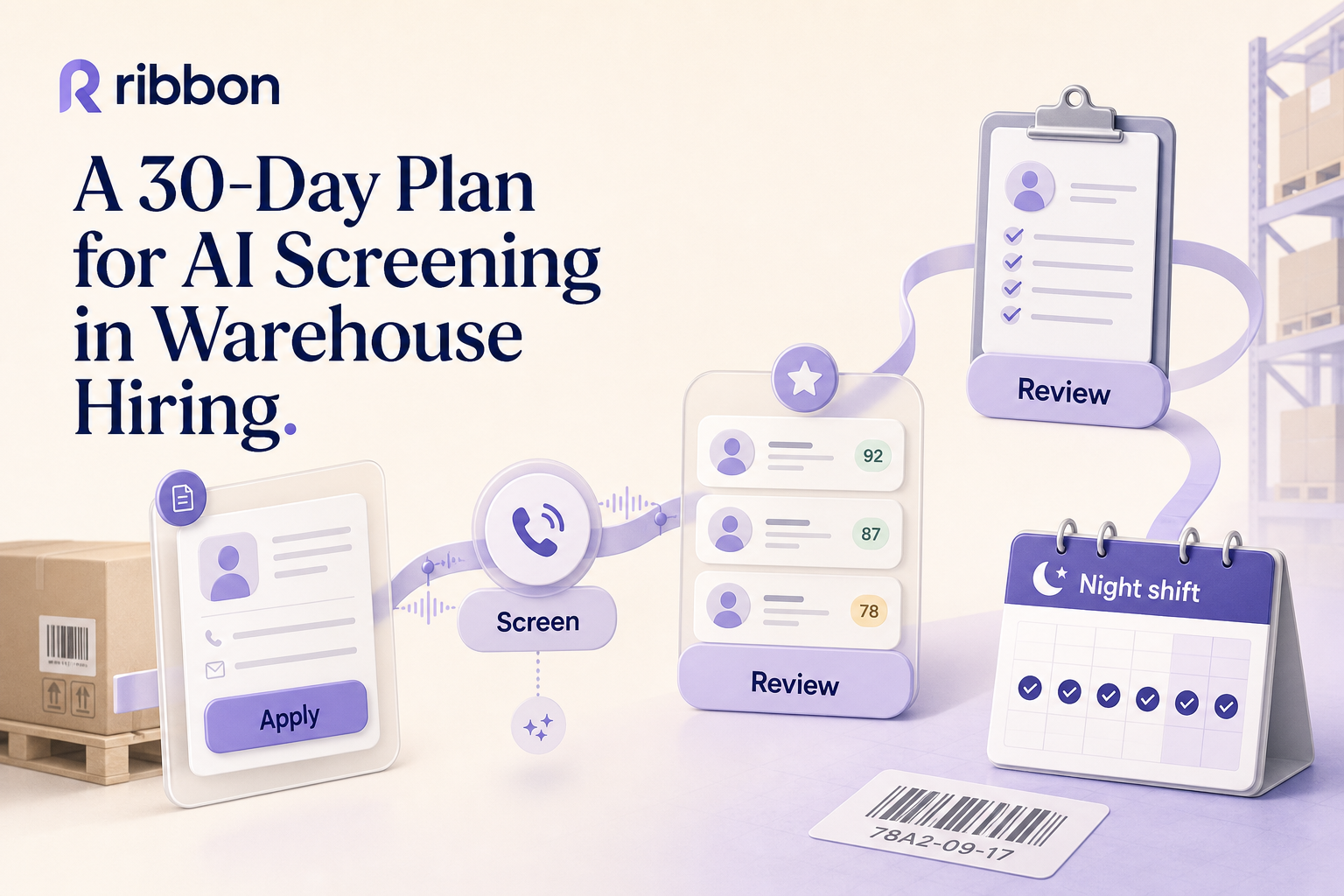
Warehouse hiring pilots fail when teams try to automate everything on day one. This plan keeps the scope tight, the scorecard usable, and the ATS handoff easy for supervisors to trust.

Ribbon's recruiting skills directory turns common hiring work into portable instructions for AI assistants. Recruiters can copy one skill into ChatGPT, Claude, or a recruiting copilot, then get a clearer workflow with inputs, output format, and guardrails built in.
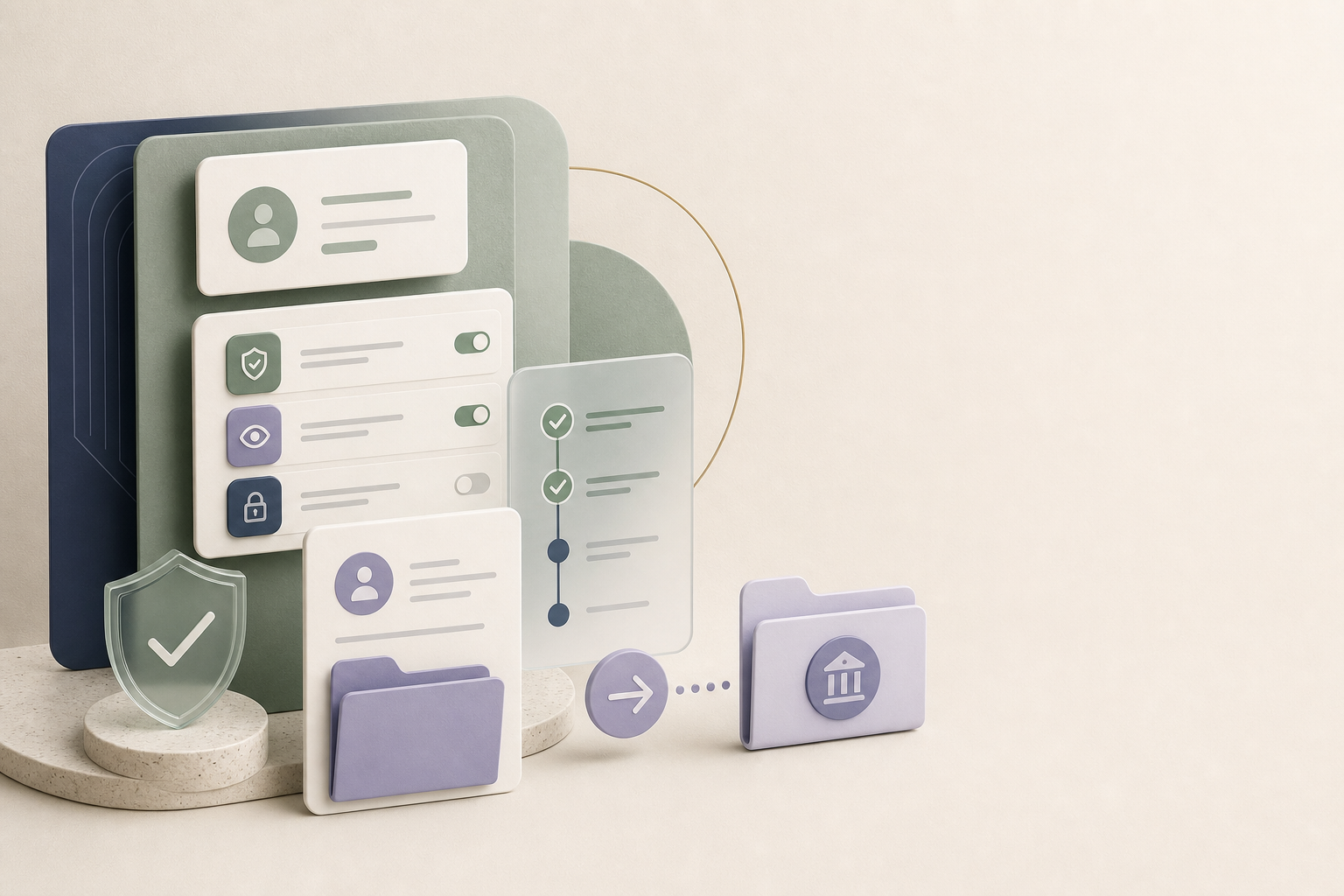
Security review can slow an AI interviewing rollout long before the first candidate finishes a screen. This guide shows talent ops teams what to document early: consent, access, human review, ATS handoff, and the audit trail a buyer will ask to see.

Self storage teams rarely lose candidates because they forgot how to interview. They lose them because the first response comes too late and the ATS record arrives half-finished.

Staffing agencies lose speed long before a candidate reaches the client. This workflow teardown shows how AI screening, structured review, and ATS-linked notes can shorten the first-screen loop without taking judgment away from recruiters.
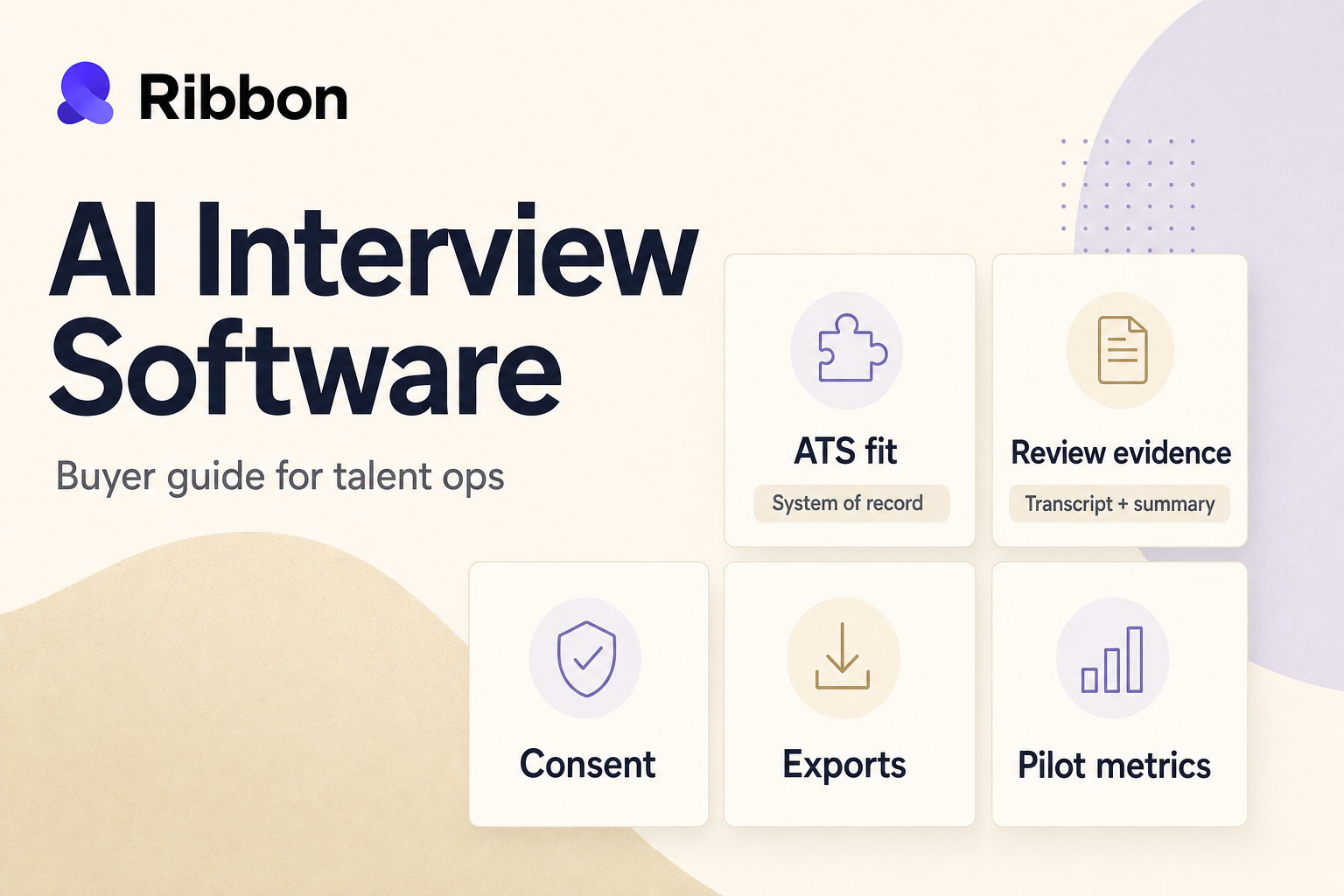
Talent ops teams do not need another slick demo. They need to know whether AI interview software will fit the ATS, produce reviewable evidence, and survive a real rollout without creating new manual work.

Manufacturing teams should not judge AI screening by time to hire alone. This guide lays out the metrics that show whether the workflow is really helping: response speed, completion rate, shortlist quality, recruiter review time, and clean ATS handoff.
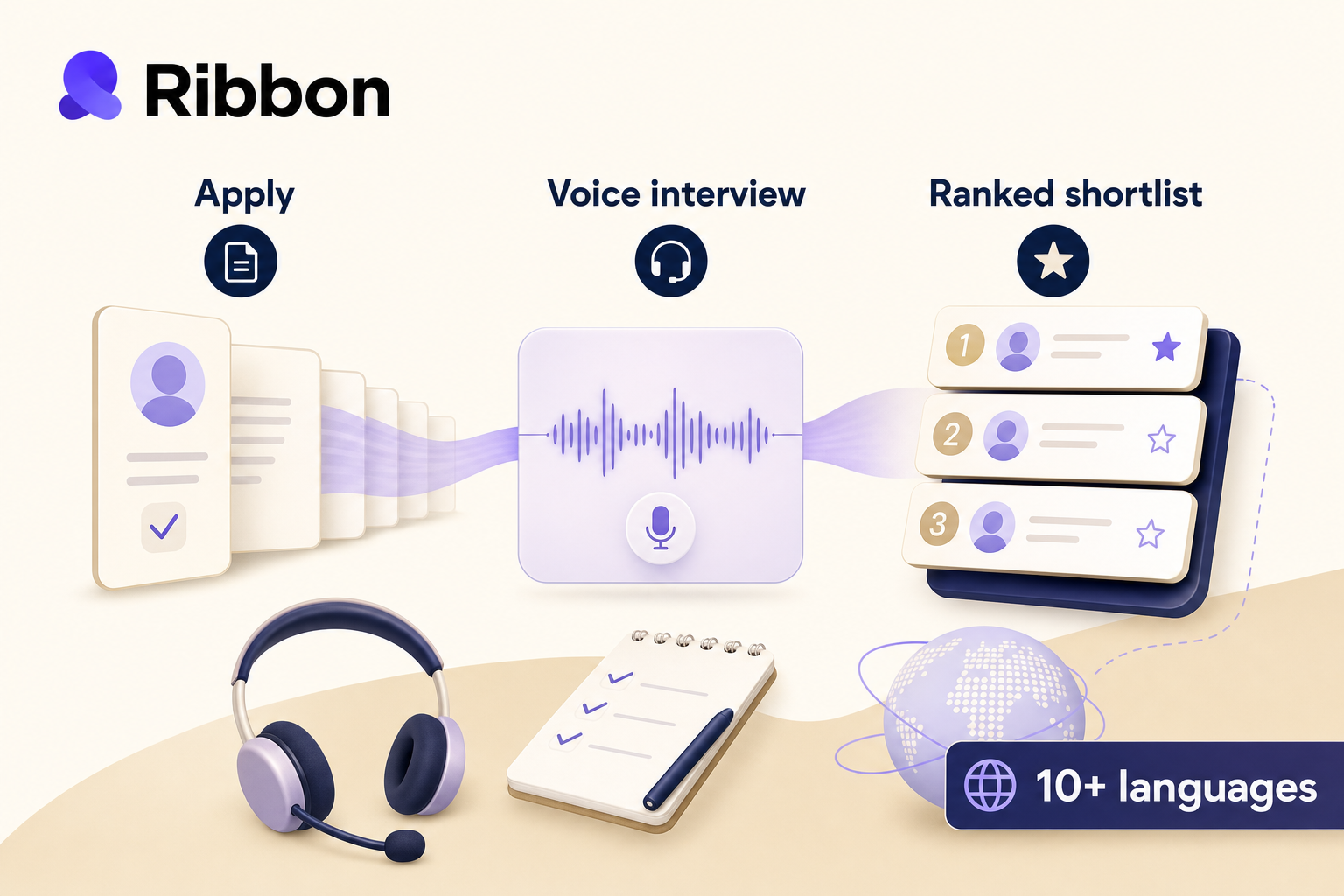
Contact center hiring is one of the clearest places to test AI screening because the interview itself is the work sample. This guide shows how to run a tight 30-day pilot: choose one hiring class, keep the ATS at the center, review transcripts and recordings, and measure whether shortlist speed really improves.

Home care hiring breaks when applicants wait too long for the first conversation. This playbook shows how AI screening can capture availability, certifications, and scheduling fit quickly, while recruiters keep control of review, follow-up, and final decisions.
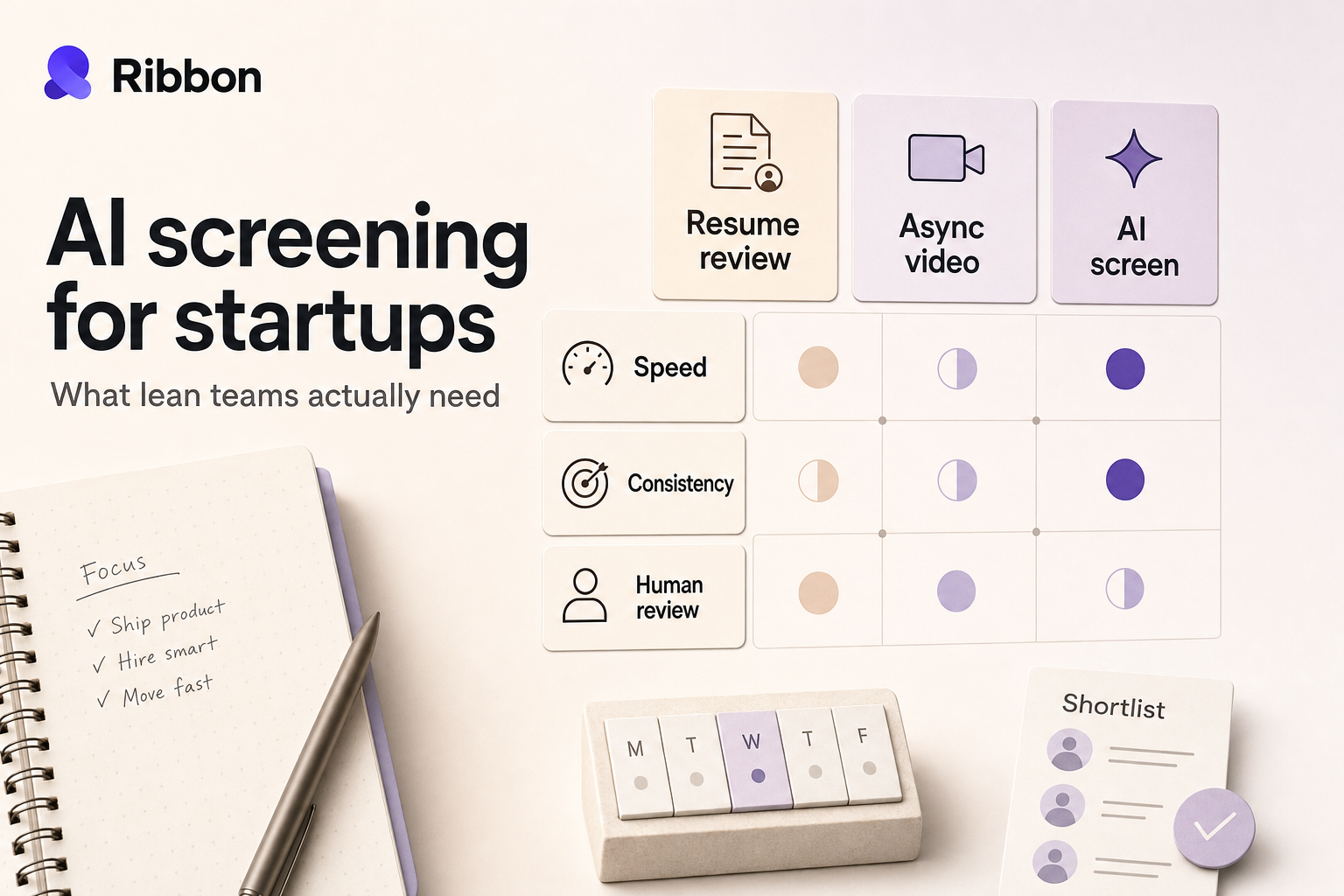
Small teams do not need another hiring tool that creates a second workflow to manage. This guide compares screening approaches and shows what lean operators should demand before they pilot AI candidate screening.
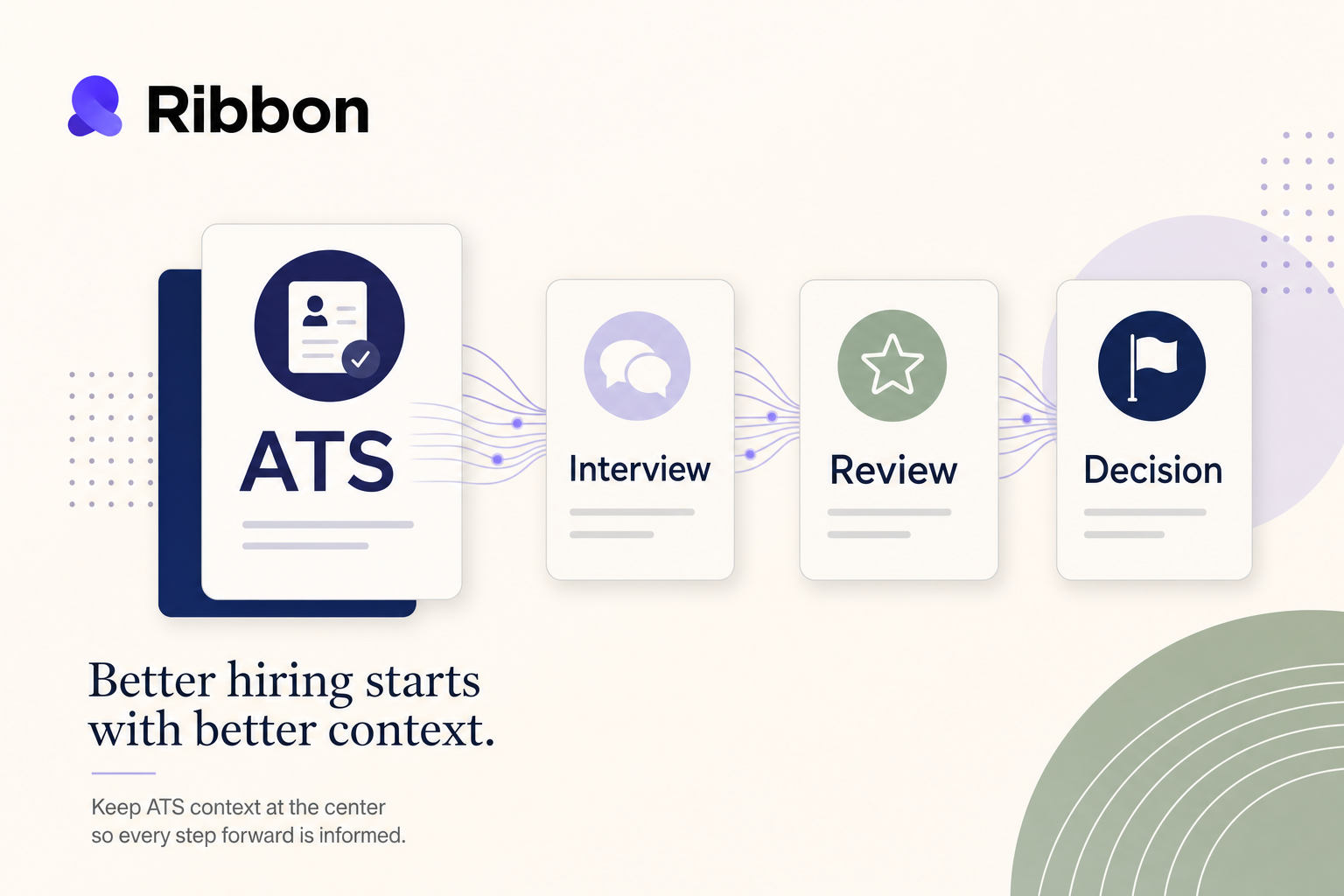
Most AI recruiting pilots fail at the handoff, not the interview. This post shows talent ops teams why ATS context matters, what the AI should own, and where human review still belongs.

Staffing agencies need faster first screens without losing candidate context. This playbook shows where AI screening helps, what should sync to the ATS, and how to pilot the workflow without creating more recruiter cleanup work.
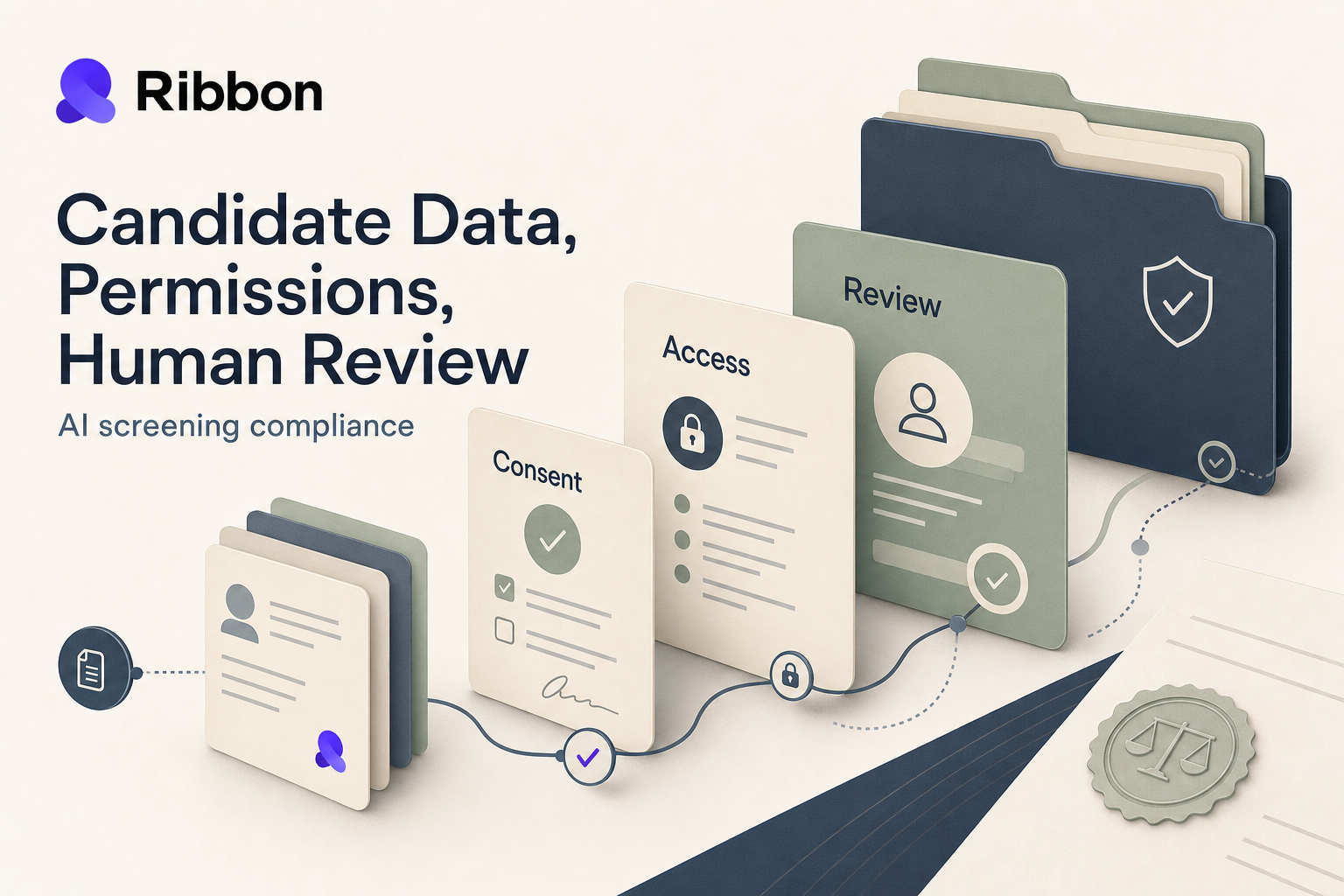
Healthcare and field service hiring teams get asked harder questions about candidate data than most. This guide shows talent leaders what to review before rollout: consent, access, recordings, summaries, and the exact point where human judgment still needs to take over.
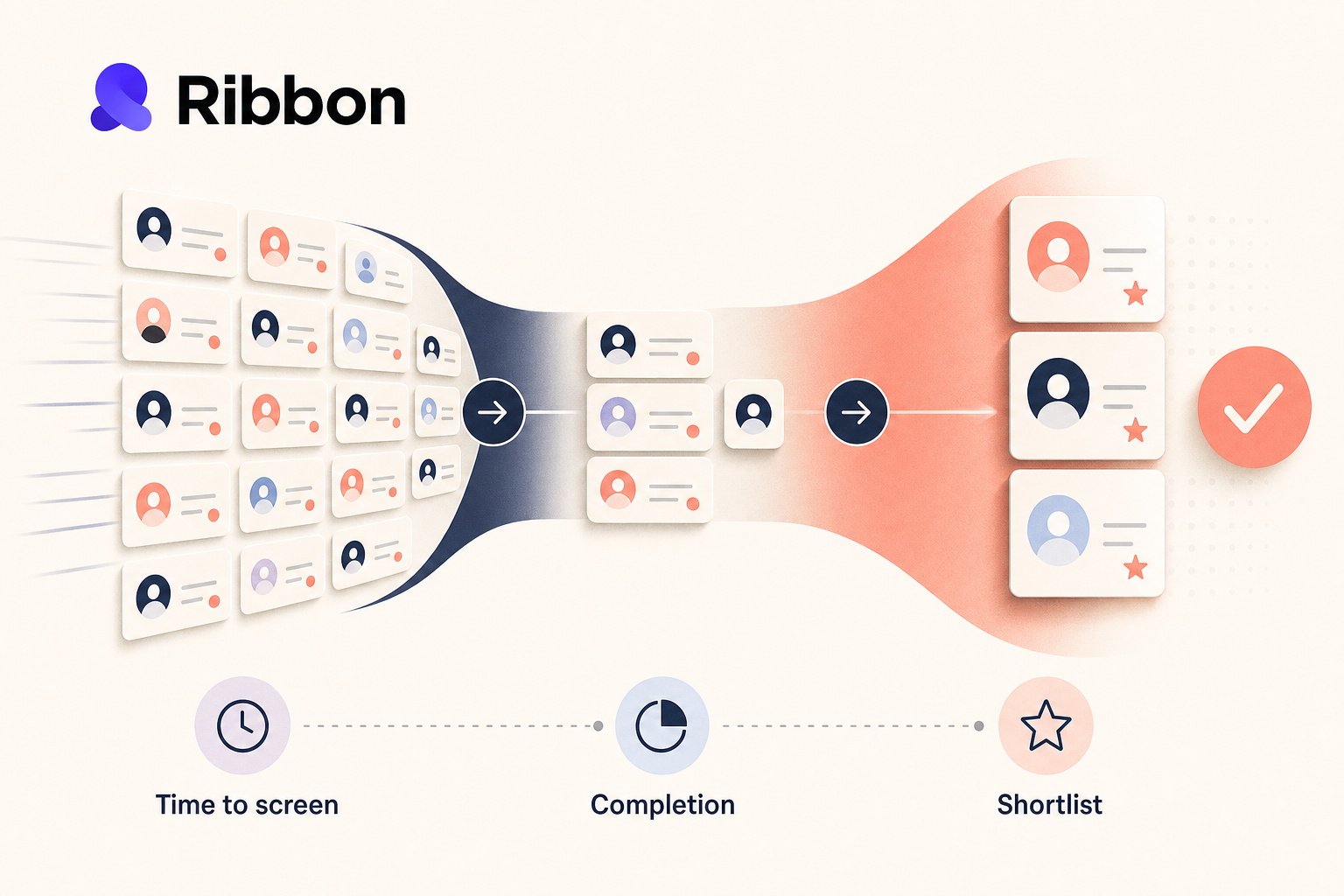
High-volume hiring pilots look better when teams measure the first-screen bottleneck, not just final hiring speed. This guide shows talent operators which metrics reveal real progress and which ones hide a prettier backlog.
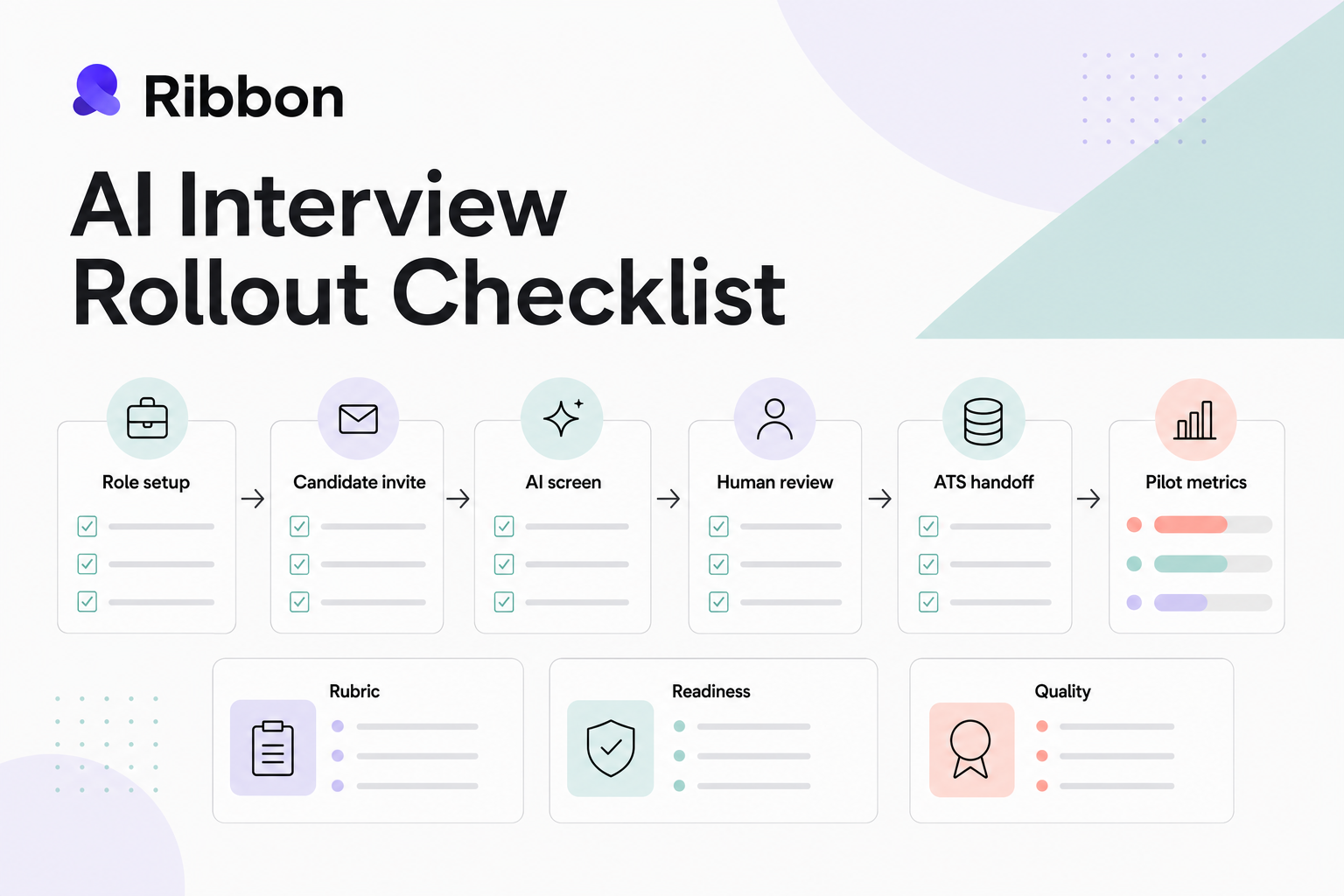
AI interviews work best when talent ops treats rollout as workflow design, not just tool setup. This checklist helps teams pick the right role, define scoring, protect candidate experience, connect the ATS, and measure whether the pilot is ready to scale.

We pulled up to Toronto Tech Week with a big purple truck, two AI interview booths, and one goal: make AI interviews feel less intimidating and a lot more human.
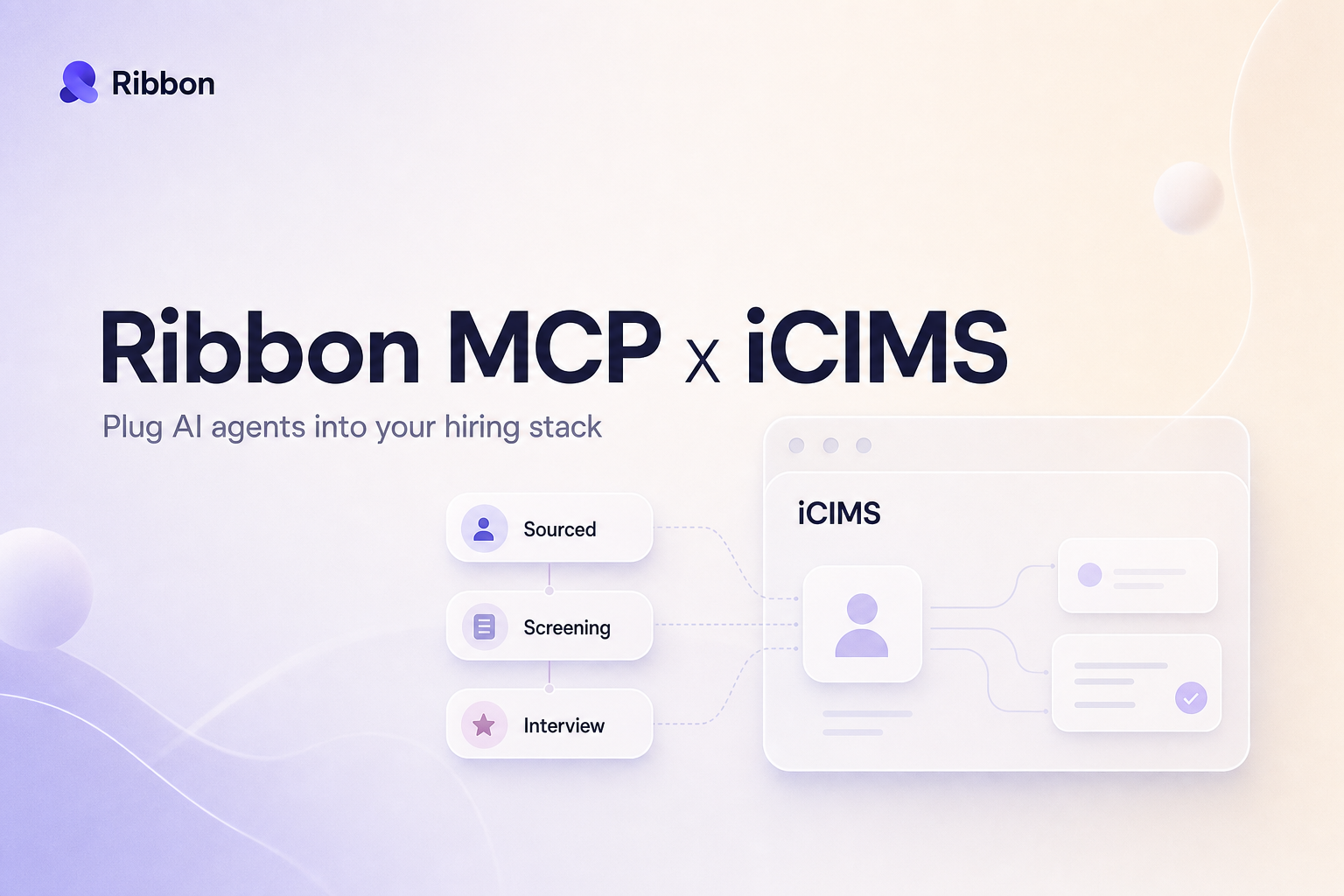
iCIMS runs hiring for a lot of large, structured talent teams, but pointing an AI agent at your pipeline usually means a custom build. Ribbon MCP gives any agent live, structured access to your requisitions, candidates, and applications, and lets it write interview results back. No integration code on your side.

Bullhorn runs a huge share of the staffing world, but pointing an AI agent at your pipeline usually means a custom build. Ribbon MCP gives any agent live, structured access to your job orders, candidates, and submissions, and lets it write interview results back. No integration code on your side.
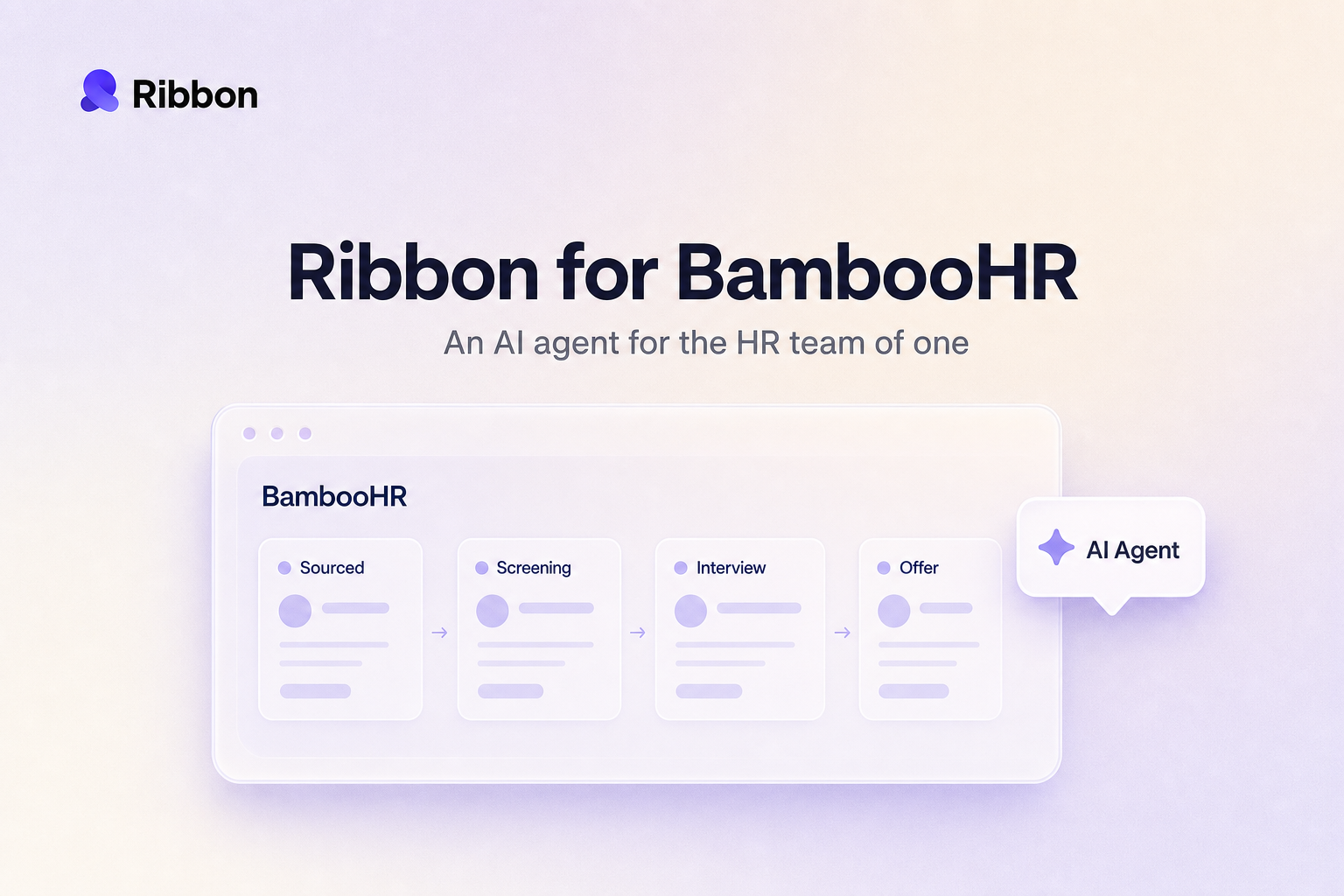
BambooHR was built for the HR generalist running recruiting alongside benefits, payroll, and onboarding. Ribbon plugs an AI agent into the Hiring module so that person stops being the pipeline bottleneck.

SmartRecruiters has one of the most expressive hiring process models in the category, and a generic AI integration usually flattens it. Ribbon MCP plugs an agent into the real model, jobs, candidates, hiring processes, stages, and scorecards, so the agent acts the way a careful recruiter would.

Ashby's strength is structure, and a generic AI integration usually flattens it. Ribbon MCP plugs an agent into Ashby's real model, candidates, applications, and interview plans, so the agent acts the way a careful recruiter would.

Ribbon MCP gives AI agents direct, structured access to your Lever pipeline. They read postings, opportunities, and stages, and write Ribbon interview outcomes back as native records on the opportunity so recruiters never leave the ATS.

Knix's Talent Acquisition team used Ribbon to staff three new store openings in three weeks, cutting per-candidate screening from twenty minutes to five and saving up to eight hours per role hired. Tina Fischer, on the Knix TA team, walked us through three wins: the math of efficiency, finding hidden gems in entry-level retail hiring, and a customer feedback flag that became shipped product within a week.

Ribbon MCP gives AI agents direct, structured access to your Greenhouse pipeline. They read jobs, candidates, applications, and stages, and write Ribbon interview outcomes back as native records on the application so recruiters never leave the ATS.

What actually changes when Ribbon connects your AI assistant to Workday, written for recruiters who want the value, not the technical detail. Real examples of what you can ask, an honest before-and-after of a recruiter's day, and the common worries answered straight.
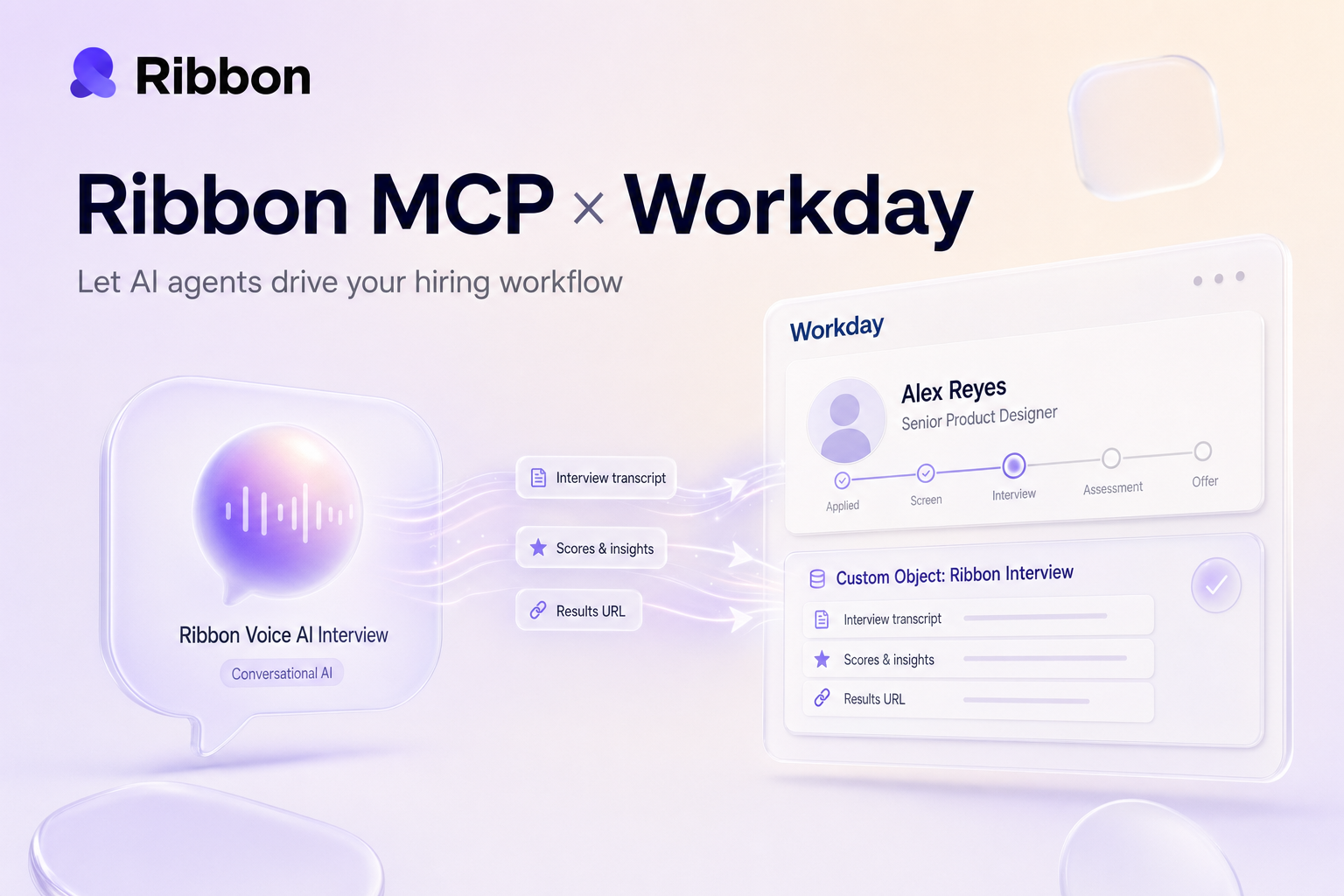
Ribbon MCP gives AI agents like Claude and ChatGPT live, structured access to your Workday Recruiting data without any custom integration work. They can read jobs, pipelines, and candidates in a single call, then write interview scores and transcripts back to Workday as a native custom object so recruiters never have to leave the ATS.
.png)
Ribbon partnered with Pivotal Growth to deliver personalised AI interviews that help identify top mortgage and protection advisor talent at scale. The solution enables faster, more consistent screening while freeing hiring teams to focus on the strongest candidates.
%20(1).jpg)
Opencare used Ribbon’s conversational AI to automate candidate screening, saving over 100 recruiter hours while delivering a flexible, human-like experience. Senior Manager Cathy Lefebvre replaced 16 daily screening calls with AI interviews that adapt in real time and produce instant summaries and scores. The result: faster, smarter, and more human hiring across global roles.
Discover how Ribbon AI helped Stepful transform workforce development admissions with AI interviewing technology, enabling efficient assessment of thousands of candidates while maintaining standards.

Recruiters see it as a tool, but some candidates are skeptical

Startups like Apriora, HeyMilo AI, and Ribbon are seeing swift adoption of their AI interview software, which can ask follow-up questions, probes key skills and delivers structured feedback to hiring managers.

Connecting Ribbon with Teamtailor is straightforward. This integration allows you to seamlessly push Ribbon's AI interview analysis directly into your Teamtailor ATS, streamlining your recruitment process.

Our collaboration with Propel Impact, led by their Executive Director, Cheralyn Chok, demonstrates how advanced interviewing technology can significantly elevate an organization's ability to recruit and nurture talent.

FinChat, the innovative platform transforming investment research through AI, partnered with Ribbon.ai to identify exceptional engineering talent for their growing team.

First Brands Group, a global leader in automotive parts manufacturing partnered with Ribbon.ai to revolutionize their technical hiring process.

Explore how AI and data analytics revolutionize remote hiring, enhancing efficiency, reducing bias, and improving candidate quality.

Explore how recruitment automation outperforms manual hiring in speed, cost, and candidate quality, transforming the hiring process.

AI tools streamline remote interview scheduling by automating tasks, enhancing candidate experience, and improving efficiency for recruiters.

Integrating ATS with video interviewing tools streamlines hiring, enhances collaboration, and improves candidate experiences.

Explore how predictive analytics enhances remote recruitment by streamlining hiring processes, improving candidate quality, and reducing costs.

Learn how to calculate the cost-per-hire by recruitment channel and optimize your hiring strategy for better results.

Step-by-step guide to structured interview scorecards: criteria, rating scales, and behavioral anchors — plus how AI keeps scoring consistent at scale.

Explore how recruitment chatbots enhance hiring efficiency with features like NLP, 24/7 availability, and personalized job suggestions.

Explore the vital role of human oversight in AI hiring to combat bias, ensure fairness, and enhance decision-making in recruitment processes.

AI video interviews provide instant feedback on candidates' performance, transforming hiring processes for recruiters and job seekers alike.

Explore 10 essential metrics for real-time recruitment success, from time to fill to candidate experience, to enhance your hiring strategy.

Explore how AI is revolutionizing recruitment feedback with instant updates, bias detection, and predictive analytics for better hiring outcomes.

Explore how real-time AI feedback is revolutionizing recruitment by speeding up evaluations, reducing bias, and enhancing candidate experiences.

Explore how AI reshapes interview analysis with enhanced accuracy, reduced bias, and efficiency, transforming recruitment processes.

Explore how AI feedback tools transform recruitment by enhancing efficiency, reducing bias, and improving candidate experiences.

Ensure your AI recruitment tools are compliant and bias-free with this comprehensive checklist addressing data protection, bias prevention, and vendor evaluation.

Explore effective strategies for reducing bias in AI recruitment tools to promote fair hiring practices in the workplace.

Explore essential steps for implementing ethical AI in hiring to enhance fairness, transparency, and accountability in recruitment processes.

Explore how feedback automation enhances the hiring process, improves candidate experience, and streamlines recruitment strategies.

AI revolutionizes candidate feedback delivery by enhancing speed, personalization, and efficiency in the recruitment process.

Real-time query tools enhance recruitment by automating communication, improving candidate experience, and streamlining hiring processes.

